A Guide to AI Credit Risk Assessment
By Liza Zautner ·
For small business owners, freelancers, and anyone managing multiple income streams, the process of applying for credit can feel like a black box. You submit your documents, wait, and hope that a traditional, often rigid, system sees your financial life the way you do. But a major shift is underway.
This isn't just about making old processes faster; it's about building a more nuanced and responsive financial system.
AI streamlines credit risk assessment and decision-making
The most immediate change brought by AI in credit risk management is a dramatic increase in speed and efficiency. By automating data collection, analysis, and decision workflows, AI-powered systems can reduce review times from days or weeks to mere minutes. This allows lenders to process applications faster and provide quicker access to capital.
Think about the traditional credit application process. It's a paper-heavy, time-intensive affair that involves gathering bank statements, tax returns, and business reports. A credit analyst then manually reviews these documents, a process that is both slow and prone to human error.
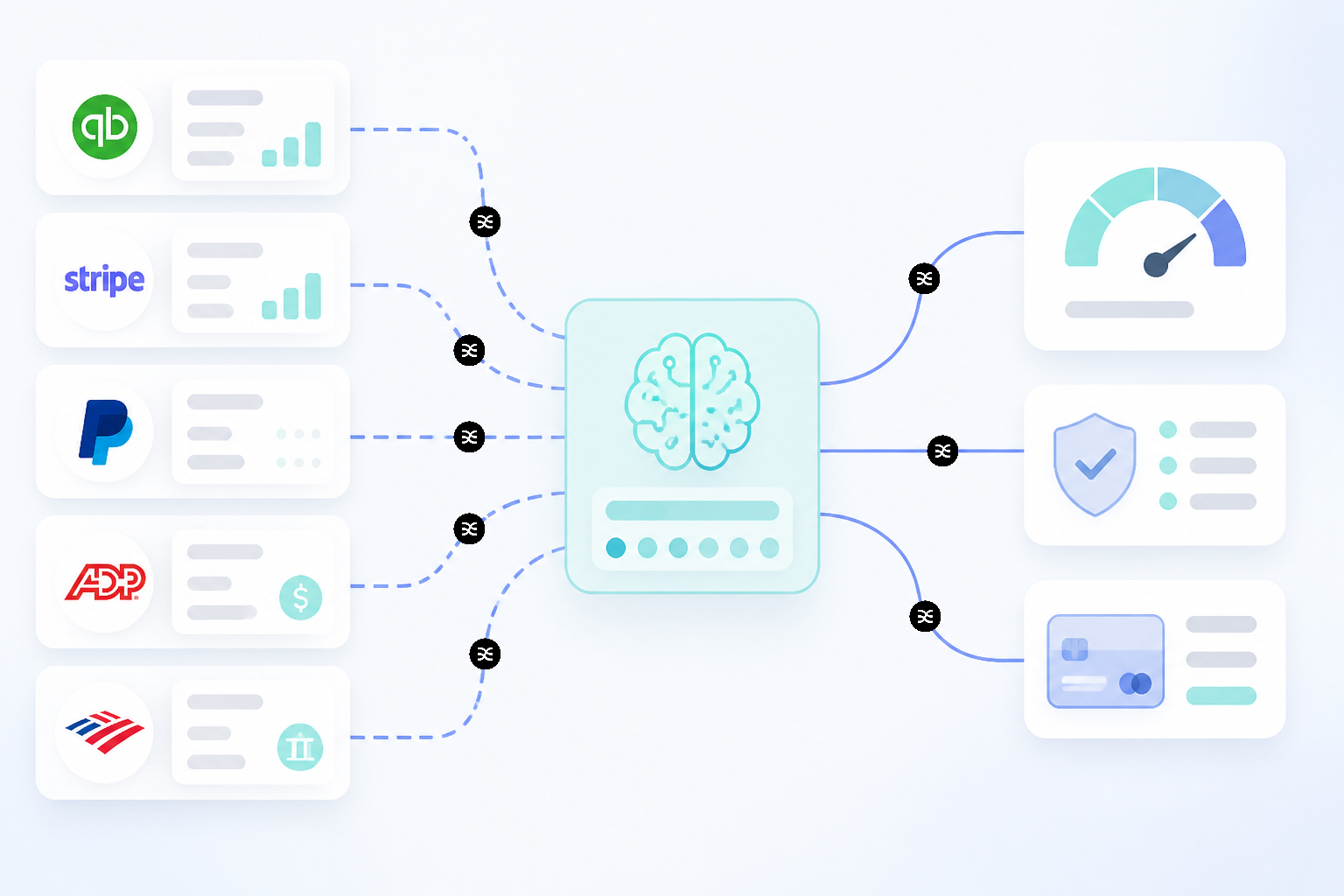
AI systems change this entirely. They can automatically pull and consolidate data from multiple sources, including traditional credit bureaus and alternative financial data streams, creating a comprehensive profile in seconds.
This automation extends beyond data gathering. AI models can run complex analyses that would be impossible for a human to perform in a reasonable timeframe.
Case studies show that implementing an AI-driven approach can lead to remarkable improvements. For instance, some companies have seen credit review times drop by as much as 89%, with 96% faster credit limit reviews and 61% faster onboarding for new customers.
From Weeks to Minutes
This acceleration isn't just a convenience; it's a fundamental change in how businesses can operate. For a small business owner waiting on a line of credit to purchase inventory or for a freelancer needing a loan to invest in new equipment, waiting weeks can mean missing opportunities. Faster decisions mean capital can be deployed more quickly, fueling growth and reducing the friction that often holds small enterprises back.
This efficiency also frees up financial professionals to focus on more complex cases that require human judgment, improving the overall quality of credit risk management.
Why is AI adoption in financial services increasing?
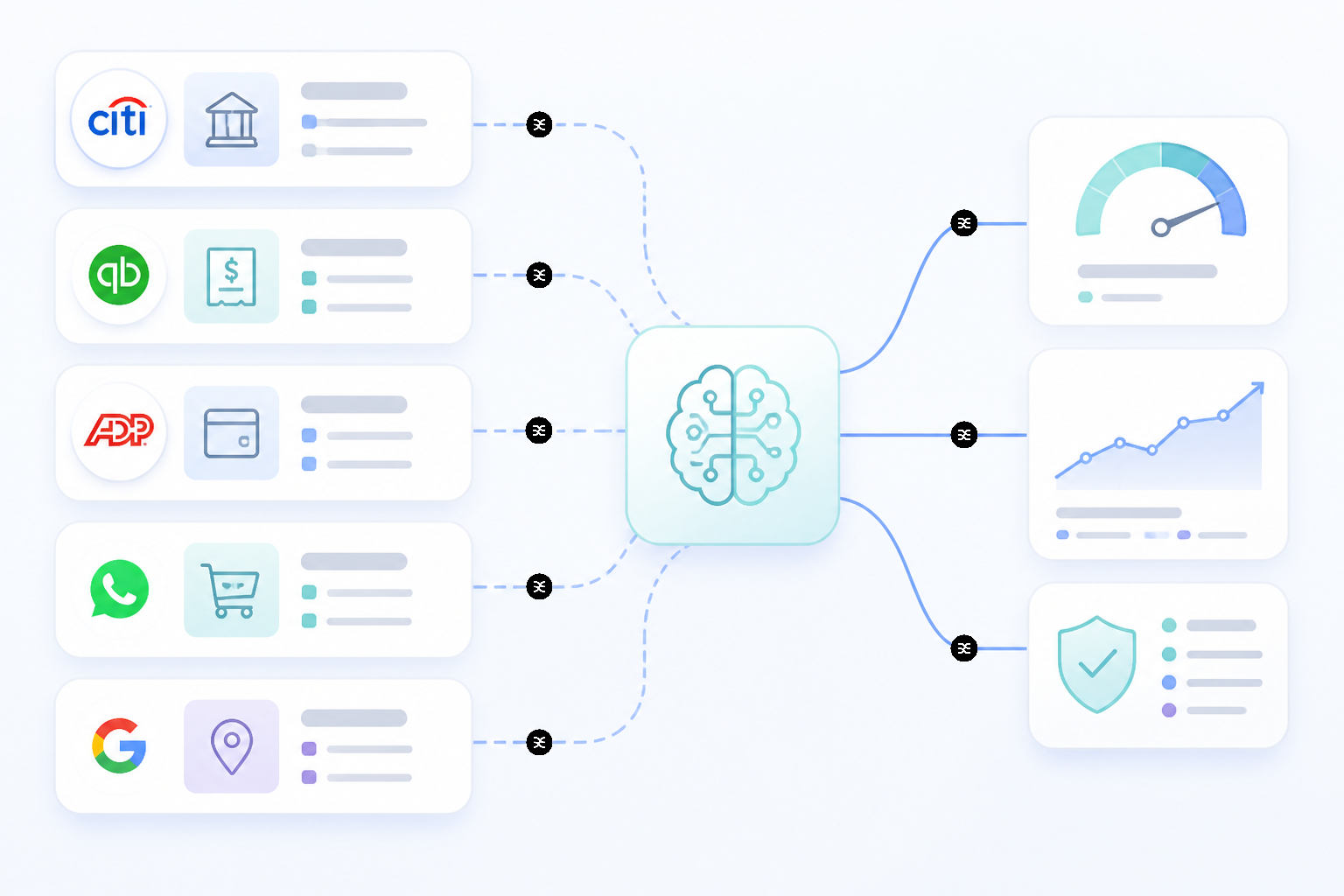 The adoption of artificial intelligence in financial services is growing rapidly because it offers a more accurate and dynamic way to assess risk. AI models can perform real-time analysis on a wide array of conventional and alternative data sources, providing a much deeper understanding of a borrower's financial health than ever before.
For decades, credit scoring has relied on a handful of key metrics, like payment history and credit utilization, which are often historical and slow to update. This approach can penalize individuals or businesses with non-traditional income streams, such as freelancers or gig economy workers, whose financial lives don't fit neatly into standard boxes. AI in the financial services industry is beginning to ramp up, largely because it can look beyond these simple metrics.
AI algorithms can analyze thousands of data points simultaneously. This includes real-time cash flow, transaction histories, utility payments, and even business-specific data like online reviews or supply chain information. By incorporating this "alternative data," AI credit risk assessment models can build a more holistic and current picture of a borrower's ability to repay a loan, making the process more inclusive.
The Role of Alternative Data
This focus on a broader data set is a major development. It means that a business with a short credit history but strong, consistent cash flow might be viewed more favorably by an AI model than by a traditional one. The system can identify positive patterns that a human analyst might miss or that a conventional credit report wouldn't show.
This real-time capability also enables continuous monitoring, allowing lenders to proactively identify and manage risk as a borrower's financial situation changes, rather than waiting for a default to occur.
How is generative AI used in credit risk management?
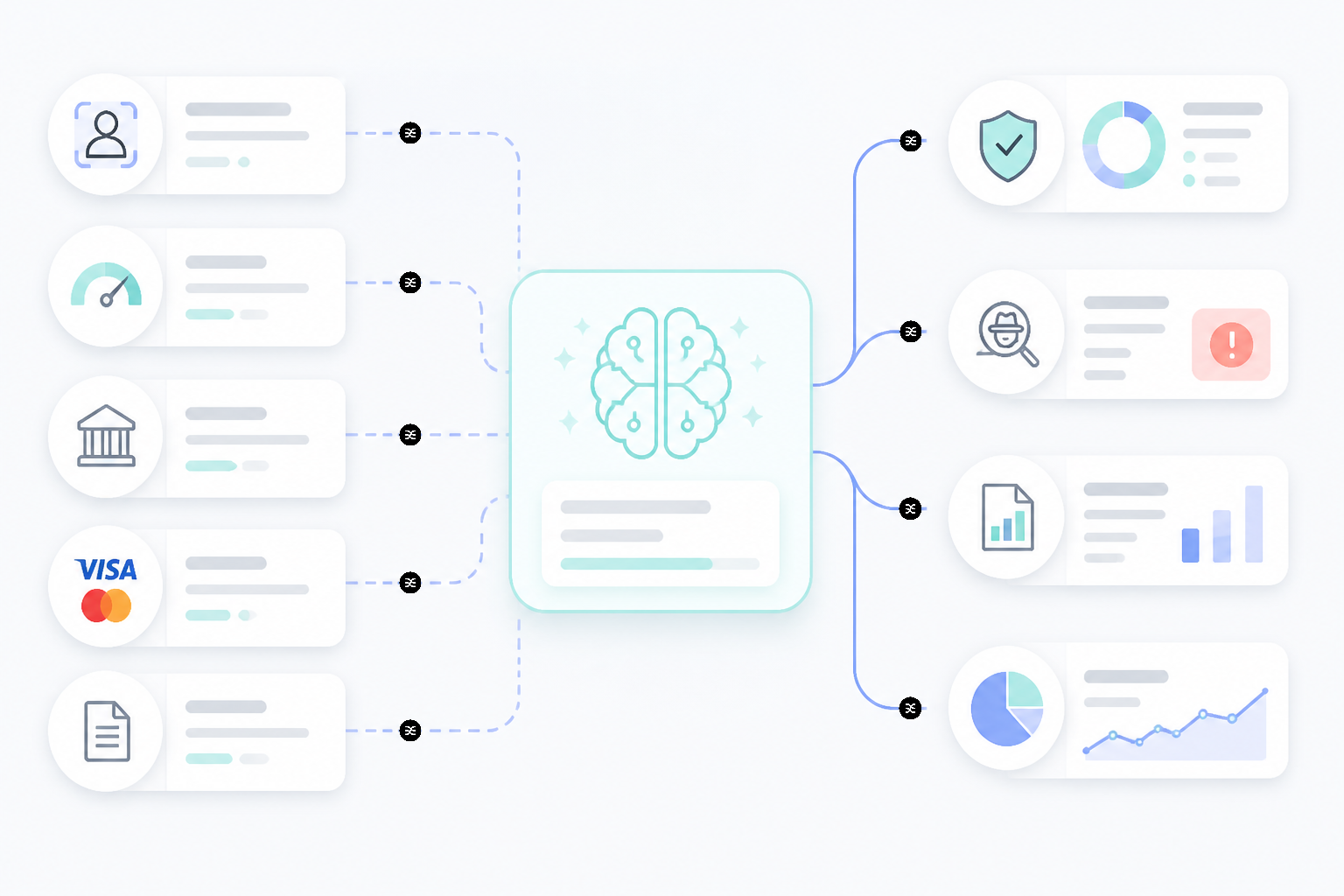 Generative AI is an emerging frontier in credit risk management, with applications spanning the entire credit lifecycle. From sophisticated customer targeting and fraud detection to generating reports and monitoring portfolios, this technology is automating complex tasks that once required significant human effort.
While traditional AI excels at analyzing existing data to find patterns (predictive AI), generative AI can create new content, summaries, and analyses. This has profound implications for credit risk. For example, a generative AI model can analyze a potential borrower's entire digital footprint, including business documents and public records, and then generate a concise risk summary for a human underwriter.
According to a report from the International Association of Credit Portfolio Managers, financial institutions are exploring generative AI for a range of uses. These include documentary reviews, pre-underwriting analysis, and even generating the text for contracts and customer communications. The report notes that portfolio monitoring is currently the leading area of activity, with nearly 60 percent of surveyed firms pursuing these use cases.
This could involve an AI that constantly surveils a loan portfolio and flags accounts showing early signs of distress, complete with a detailed explanation. Tools focused on automating financial workflows operate on a similar principle of using rules and data to move processes from manual to automatic, and generative AI is poised to take this concept even further in the credit space.
This technology can also enhance fraud detection by simulating potential fraud scenarios and identifying subtle anomalies that might indicate fraudulent activity. As generative AI becomes more integrated, it will likely handle more of the routine, data-intensive aspects of credit risk, allowing human experts to focus on strategy and complex decision-making.
What are the challenges of using AI for credit risk?
Despite its benefits, the use of AI in credit risk assessment introduces new challenges, particularly around model instability, bias, and a lack of transparency. These models can be complex "black boxes," making it difficult to understand how a decision was reached, which raises significant regulatory and ethical questions.
An AI model is only as good as the data it's trained on. If historical data contains biases, the AI will learn and perpetuate them. For example, if a model is trained on lending data from a period where certain neighborhoods or demographics were unfairly denied credit, it may continue to produce biased outcomes, even if the explicit discriminatory factors are removed.
This is a major concern for regulators and consumers alike, who demand fairness and accountability in lending.
Another issue is model drift or instability. The financial world is constantly changing, and a model trained on data from a stable economic period may perform poorly during a downturn.
We saw this in macro terms during the recent period of high inflation, where the Federal Reserve noted that despite improvements, many households still felt their financial situation had worsened. An AI model for credit risk assessment needs to be continuously monitored and retrained to adapt to these shifting economic realities.
Finally, the complexity of some advanced machine learning models makes them difficult to explain. If a borrower is denied credit, lenders are often legally required to provide a reason. With a simple, rule-based system, this is straightforward.
With a deep neural network, pinpointing the exact reason can be nearly impossible. This "black box" problem is a major hurdle for the widespread adoption of the most advanced AI techniques.
Faster, more accurate risk assessments with AI
AI models deliver faster and more accurate risk assessments by processing huge volumes of data in real time, identifying subtle patterns that traditional methods miss. This capability not only improves the quality of lending decisions but also provides a powerful defense against increasingly sophisticated fraud schemes.
The core advantage of AI credit risk assessment is its ability to see the forest and the trees. While a human analyst can review a few key documents, an AI can analyze thousands of data points in the time it takes to blink. This includes everything from traditional credit scores to real-time cash flow, social media sentiment, and even macroeconomic indicators.
By synthesizing this information, the AI builds a multi-dimensional view of risk that is far more nuanced and accurate than a simple FICO score.
This leads to better decisions for everyone. For lenders, it means a lower likelihood of defaults and a more profitable loan portfolio.
For borrowers, especially those with non-traditional financial profiles like small business owners, it can mean getting approved for credit they might have been denied under an older system. One of the key areas of focus in developing these systems is the use of alternative data and real-time analysis to create more equitable and precise outcomes.
Below is a comparison of how traditional and AI-based approaches differ:
| Feature | Traditional Credit Assessment | AI Credit Risk Assessment |
|---|---|---|
| Data Sources | Limited to credit bureaus, applications | Vast, including bank data, public records, alternative data |
| Analysis Speed | Days or weeks | Real-time or near-real-time |
| Decision Basis | Static, rule-based, historical | Dynamic, predictive, pattern-based |
| Inclusivity | Can exclude those with thin credit files | More inclusive of non-traditional financial profiles |
| Fraud Detection | Relies on known patterns, manual review | Proactively identifies new and complex fraud patterns |
This advanced analytical power is also a game-changer for fraud detection. AI systems can identify anomalous behavior that signals fraud, such as unusual transaction patterns or inconsistencies across different documents, far more effectively than manual checks.
What is AI's impact on financial operations?
The adoption of artificial intelligence is fundamentally changing how financial institutions operate by automating core processes, improving risk management, and allowing for more personalized customer products. This shift moves companies from a reactive to a proactive stance, enabling them to anticipate market changes and customer needs more effectively.
The integration of AI into finance is not just an incremental improvement; it represents a new way of doing business. The adoption of AI in the financial sector is fundamentally transforming credit risk assessment and reshaping the business models themselves.
By automating routine tasks like data entry, document verification, and initial credit screening, AI frees up skilled employees to concentrate on tasks requiring strategic thinking and human interaction. This leads to greater operational efficiency and lower costs.
Beyond efficiency, AI provides businesses with deeper insights. Predictive models can forecast default rates with greater accuracy, allowing banks to adjust their lending strategies in response to changing economic conditions. For an SMB owner or freelancer, this could mean that lenders are better able to offer products tailored to the realities of a fluctuating income or a project-based business cycle, rather than applying a one-size-fits-all approach.
" A financial institution can use AI to understand a customer's specific needs and offer them the right product at the right time, whether it's a small business loan, a line of credit, or a cash management solution. This data-driven approach strengthens customer relationships and creates a more responsive and resilient financial ecosystem.
What the Bureau of Labor Statistics — Employment Situation reveals
Recent employment data provides crucial context for AI credit risk assessment, highlighting a dynamic labor market with steady job growth and fluctuating wages. These macroeconomic trends are critical inputs for AI models, as they directly impact a borrower's ability to repay debt and the overall risk within a lender's portfolio.
The monthly Employment Situation Summary from the Bureau of Labor Statistics is one of the most important indicators of the economy's health. The most recent reports show trends like modest increases in total nonfarm payroll employment and shifts in average hourly earnings across different sectors.
For instance, the latest BLS report might show strong hiring in healthcare but a slowdown in construction. This kind of detailed information is invaluable for a sophisticated AI credit risk assessment system.
An AI model doesn't just look at an individual's financial statement in isolation. It cross-references that data with broader economic trends. If an applicant for a business loan is in a sector showing rapid growth and rising wages, the AI might view them as a lower risk, even if their personal credit history has some blemishes.
Conversely, an applicant in a declining industry might be flagged for closer review.
This is where AI shows its power. It can process these complex, interconnected data points in a way that a human analyst, who might be prone to generalized feelings about the economy, cannot. The AI can quantify the specific risk associated with employment trends in a particular industry, in a specific geographic area, and translate that into a more accurate credit decision.
For freelancers and small business owners, whose income is directly tied to the health of their industry, this level of detailed analysis can lead to fairer and more informed lending outcomes.
What the U.S. Small Business Administration — Manage Your Finances reveals
Guidance from the U.S. Small Business Administration (SBA) emphasizes core financial management principles that align perfectly with the data AI credit risk assessment models are designed to analyze. The SBA's focus on cash flow management, separating business and personal finances, and maintaining reserves are exactly the behaviors that AI systems are trained to identify as signs of a lower-risk borrower.
The SBA advises small business owners to be meticulous about their financial health. Their guides stress the importance of understanding and projecting cash flow, which they call the lifeblood of a small business. By keeping separate bank accounts for personal and business use to maintain a clear financial picture and protect personal assets.
These best practices aren't just good advice; they are data points. An AI credit risk assessment system can analyze a business's bank account transactions to see these principles in action. It can identify:
Consistent Cash Flow: Does the business have steady, predictable income, or is it marked by wild swings without corresponding reserves?
Financial Discipline: Are business and personal expenses clearly separated, or are funds commingled in a way that obscures the company's true performance?
Building Reserves: Is the business systematically setting aside cash for taxes, unexpected expenses, or future investments?
When a small business follows the SBA's advice, it creates a clean, transparent financial record. This is exactly the kind of data that allows an AI model to make a quick and confident assessment. A history of disciplined financial management, even for a new business without a long credit file, can be a powerful signal of creditworthiness in an AI-driven system.
What the IRS — Small Businesses & Self-Employed reveals
IRS guidelines for small businesses and the self-employed highlight the importance of diligent record-keeping and tax planning, which are key indicators of financial responsibility that AI credit risk models can evaluate. A business that manages its tax obligations effectively is often a well-managed business in other respects, making this a valuable data point for assessment.
The IRS provides extensive resources for the Small Businesses & Self-Employed community, covering everything from choosing a business structure to understanding a home office deduction. A central theme throughout this guidance is the non-negotiable need for accurate and contemporaneous records. For freelancers and SMB owners, this means tracking all income and expenses and, crucially, making regular estimated tax payments.
This is another area where AI credit risk assessment can see beyond a simple credit score. An AI model can be designed to analyze bank transaction data to look for signs of sound tax management. For example, it can see if a business is regularly setting aside a percentage of its income into a separate account for taxes.
It can also identify quarterly payments made to the IRS.
These actions demonstrate a high level of financial discipline and foresight. A business owner who is on top of their tax obligations is less likely to face a sudden, crippling tax bill that could jeopardize their ability to repay a loan. For an AI model, this pattern of responsible behavior is a strong positive signal.
It suggests the owner is not just thinking about today's cash flow, but is planning for the future, which is a hallmark of a lower-risk borrower.
What the Consumer Financial Protection Bureau — Consumer Tools reveals
The work of the Consumer Financial Protection Bureau (CFPB) underscores the need for transparency and fairness in lending, which is a central challenge for AI credit risk assessment. The CFPB's focus on providing consumers with clear information and protecting them from unfair practices shapes the regulatory environment in which AI models must operate.
The CFPB's mission is to ensure that financial products are safe and understandable for consumers. Their suite of Consumer Tools helps people navigate everything from mortgages to credit cards, and their regulations require lenders to be transparent about the terms of credit and the reasons for adverse decisions, like a loan denial. This creates a direct tension with the "black box" nature of some complex AI models.
When a lender uses an AI to make a credit decision, they must still be able to explain that decision to the consumer in plain language. This has spurred a whole field of study known as "Explainable AI" (XAI), which aims to build models that are not only accurate but also interpretable. An XAI system might be able to say, "This application was denied because of a high debt-to-income ratio and a recent history of late payments," rather than just outputting a "deny" signal.
The CFPB's oversight means that any institution implementing AI credit risk assessment must prioritize fairness and transparency. They must constantly audit their models for bias and ensure that their systems comply with fair lending laws. For borrowers, this means that even as technology makes lending more automated, there are still powerful guardrails in place to protect their rights and ensure they are treated fairly.
What McKinsey — Financial Services Insights reveals
Insights from consulting firms like McKinsey highlight the strategic imperative for financial institutions to integrate AI not just as a tool, but as a core component of their business strategy. They see AI as essential for staying competitive, managing risk in a volatile economy, and meeting the evolving expectations of digitally native customers, including small business owners and freelancers.
McKinsey's analysis of the financial sector consistently points to a future where data analytics and AI are central to every part of the business. Their financial services insights suggest that banks and lenders that fail to adopt these technologies will fall behind, burdened by higher costs, less accurate risk models, and an inability to offer the personalized services that modern customers demand. The opportunity isn't just in credit risk; it's in everything from fraud detection to marketing and customer service.
For SMB owners and freelancers, this industry-wide push has significant implications. As financial institutions become more data-driven, they become better equipped to understand and serve businesses with complex or non-traditional finances. This is where modern financial tools can make a difference.
Sequence Agentic is an API for AI builders who want to automate granular money movement without becoming banking engineers. It can help a business owner automatically organize their finances—setting aside funds for taxes, profit, and operating expenses—creating the clear, auditable transaction history that AI credit assessment models are designed to reward.
The trend McKinsey identifies is a move toward a more integrated financial ecosystem. In this system, financial tools, banks, and AI-driven platforms work together to provide a seamless flow of information. This helps lenders make better decisions and helps business owners get faster access to the capital they need to grow, all based on a much more complete and accurate picture of their financial health.
What Frontiers | AI's Revolution in Credit Risk reveals
Academic and research publications are deeply engaged with the technical challenges of AI credit risk assessment, particularly the risk of the models themselves. As machine learning methods become more powerful, there's a growing need for a robust framework to manage issues like model instability and overfitting to ensure that the decisions they produce are reliable and fair.
While the business world focuses on the benefits of AI, the scientific community is working to understand and mitigate its risks. " This refers to the potential for an AI model to make incorrect predictions that lead to negative outcomes, such as approving a bad loan or unfairly denying credit to a qualified applicant.
One major concern is overfitting. This happens when a model "memorizes" the training data too well, including its noise and biases, but fails to generalize to new, unseen data. A model that is overfitted to historical data might perform perfectly in tests but fail spectacularly when deployed in the real world with live data.
0 is crucial, establishing protocols for testing, validation, and ongoing monitoring.
To address these issues, researchers are developing new techniques for ai risk management training and model validation. This includes methods for detecting bias, measuring a model's stability over time, and creating "explainable AI" that provides insight into how decisions are made. The goal is to build AI systems for credit risk assessment that are not only powerful and accurate but also transparent, fair, and trustworthy.
The Future of Credit: An AI-Driven Landscape
The shift toward AI credit risk assessment is more than just a passing trend; it's a fundamental change in how financial decisions are made. By leveraging vast amounts of data and sophisticated algorithms, these systems are creating a more efficient, accurate, and potentially more inclusive credit market. For small business owners, freelancers, and anyone whose financial life doesn't fit a traditional mold, this technology holds the promise of fairer access to the capital needed to thrive.
However, this transition is not without its challenges. The concerns around bias, transparency, and model risk are real and require careful management. 0 that ensures these powerful tools are used responsibly.
The future of credit isn't about replacing human judgment entirely, but about augmenting it with technology that can provide a deeper, more nuanced understanding of risk.
As this technology continues to mature, we can expect to see even more personalized and responsive financial products. The days of the one-size-fits-all loan application are numbered. A dynamic, data-driven process will evaluate each borrower on their unique financial footing, creating a more resilient and equitable financial system for everyone.