A Guide to Split Billing Software
By Gilad Uziely ·
The check arrives after a group dinner, and a flurry of phones appear. Someone opens a P2P app to cover their share, another sends their portion to a friend, and a third pays with cash.
This casual act of splitting expenses is now incredibly common. In fact, a recent survey found that 47% of American consumers use P2P payment platforms to divide costs for everyday things like meals and groceries.
While splitting a dinner bill is a simple social transaction, it points to a much bigger trend in how money moves. Our financial lives, both personal and professional, are becoming more fragmented. For a small business owner, freelancer, or an AI agency, this is about correctly allocating a single client payment to cover taxes, operating expenses, payroll, and profit, all from one deposit.
The simple act of "splitting the bill" becomes a critical business function, and the stakes are much higher. This growing complexity is why the billing and invoicing software market is projected to grow to $23.69 billion by 2035, as businesses seek smarter ways to manage their money.
What Exactly Is Split Billing Software?
At its core, split billing is the process of dividing a single financial transaction into multiple parts and directing those parts to different accounts or categories based on a set of rules. The most well-known and complex application is found in the healthcare industry, specifically within the federal 340B Drug Pricing Program.
In this context, specialized split billing software is essential for compliance. Hospitals and clinics use it to distinguish between drugs dispensed to eligible outpatients (which qualify for significant discounts) and those used for ineligible inpatients. The software automates this separation, tracking inventory virtually, and ensuring that drug replenishment orders are placed correctly with different purchasing accounts.
Without this technology, managing a 340B program would be an overwhelming manual task, prone to costly compliance errors. This specific need has given rise to a whole ecosystem of 340b split billing software vendors who focus on this intricate area. 18 billion by 2030.
Beyond Healthcare: A Tool for Modern Business
While the 340B program is a powerful example, the principles of split billing software are now being applied across a wide range of industries. The fundamental challenge is the same: one incoming payment needs to be intelligently divided to serve multiple purposes. Think of a SaaS company that needs to split a subscription payment into revenue, sales tax remittance, and a commission for its affiliate partner.
Or a construction firm that must allocate a client's deposit to cover materials, subcontractor payments, and its own operational overhead.
This trend is also visible in sectors like utilities, where the utility billing software market is expected to hit $9.82 billion by 2031, partly driven by the need for more sophisticated, cloud-based billing solutions. For any small business or freelancer, manually performing these splits is time-consuming and introduces risk. A single, large deposit sitting in a checking account can create a false sense of security, masking the true amount of cash available after accounting for taxes and other obligations.
| Feature | Manual Splitting | Split Billing Software |
|---|---|---|
| Process | Manually calculate and transfer funds between accounts after receiving a payment. | Automatically routes funds to designated accounts based on preset rules the moment a payment arrives. |
| Accuracy | High potential for human error in calculations or forgotten transfers. | Significantly reduces errors through automation and consistent application of rules. |
| Time | Time-consuming, requires regular, active management, often in batches. | Operates in the background, saving hours of administrative work each month. |
| Visibility | Cash flow clarity is delayed until manual transfers are complete. | Provides a real-time, accurate picture of financial allocations across all accounts. |
How is AI Reshaping Billing and Invoicing?
 The entire billing and invoicing landscape is undergoing massive change, largely thanks to advancements in artificial intelligence and cloud computing. 23% by 2035, as businesses ditch outdated manual processes for smarter, automated systems.
AI-powered tools are moving beyond simple invoice generation. They now focus on simplifying complex tasks like identifying errors before an invoice is sent, automating payment follow-ups, and intelligently categorizing expenses. This infusion of AI is making financial management more predictive and less reactive.
From Manual Rules to Intelligent Routing
In the past, even automated systems relied on rigid, manually configured rules. You had to tell the software exactly what to do in every scenario. Today's AI-native solutions are more dynamic.
They can analyze payment data, identify patterns, and help businesses create more sophisticated and adaptable financial workflows.
For example, what an AI-enhanced split billing software could do. It could:
- Automate Invoice Categorization: Instantly recognize the source of an incoming payment and apply the correct splitting rules without human intervention.
- Detect Anomalies: Flag a payment that doesn't match an expected invoice amount or a split that deviates from the norm, thus preventing potential errors.
- Optimize Cash Flow: Analyze payment cycles and suggest adjustments to splitting rules to better align with upcoming expenses or savings goals.
- Ensure Compliance: In complex fields like healthcare, advanced software helps maintain the intricate crosswalks between drug codes and billing records, automating a critical compliance function.
This layer of intelligence reduces processing times, improves accuracy, and frees up business owners to focus on their work instead of their administrative backlog.
What Are the Primary Split Payment Methods?
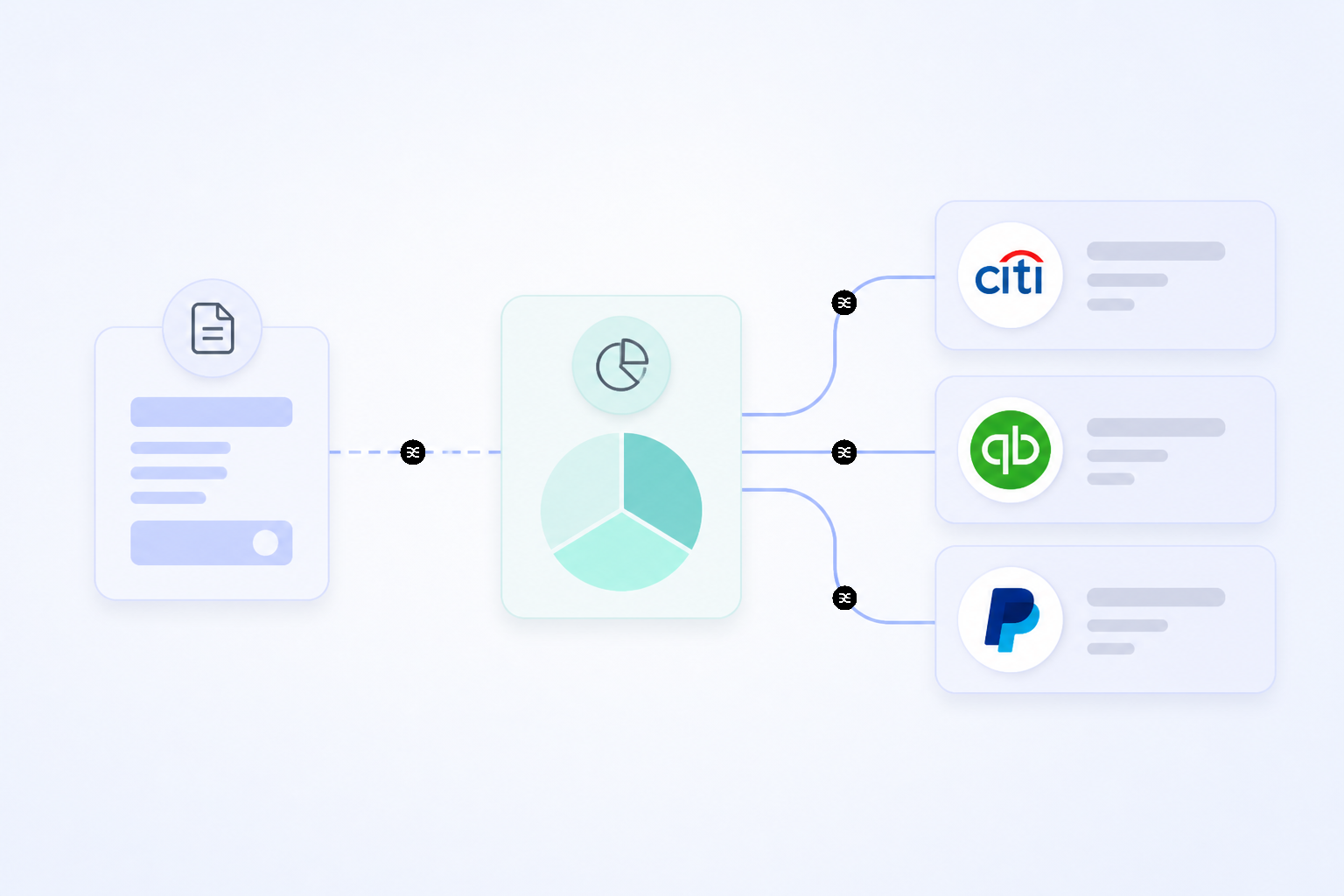 The term "split payment" can refer to several different actions, ranging from simple consumer behavior to complex, automated business processes. Understanding the different split payment methods helps clarify where sophisticated split billing software fits in.
- At the Point of Sale (POS): This is the most straightforward method. A customer asks a cashier to split a single purchase across two or more credit cards or payment types. The split happens once, at the terminal.
- Peer-to-Peer (P2P) Transfers: As mentioned earlier, this involves one person paying the full bill and then using a P2P app like Venmo or Zelle to request reimbursement from others, or by using a service like PayPal. The money movement happens after the initial transaction.
- Platform-Mediated Splitting: Online marketplaces and service platforms use this method extensively. When a customer pays for a product on an online marketplace or service platform, the platform's software automatically splits the payment, sending the platform's fee to one account and the remainder to the seller or host.
- Automated Rules-Based Routing: This is the domain of modern split billing software and financial automation tools. A business or individual sets up rules that automatically divide incoming funds. For instance, a rule might state: "For every client payment that arrives in my business checking, route 25% to a tax savings account, 10% to a profit account, and leave the rest for operating expenses." This is a proactive split payment method designed for financial management, not just settling a bill.
The Future is Automated and Precise
The journey of splitting payments, from a group of friends settling a dinner tab to a hospital managing a multi-million dollar pharmacy program, shows a clear direction. We are moving toward a future where money management is more automated, precise, and intelligent. The old way of letting all your income pool in a single checking account and then trying to figure it all out later is being replaced by systems that organize your money for you.
What began in highly regulated and complex industries is now becoming accessible to everyone. This shift towards automated money management is why tools like Sequence are emerging. They allow business owners and freelancers to create rules-based workflows, or "sequences," that automatically split incoming payments and route funds between different accounts, like a personal version of the sophisticated split billing software used by large enterprises.
This move from manual transfers to automated routing marks a significant step in giving individuals more control over their financial picture.
This evolution is fundamentally about clarity. When your money is automatically organized according to your goals and obligations, you have a true, real-time understanding of your financial position. It removes the guesswork and a great deal of the stress, allowing you to make better decisions with confidence.