How to Automate Bill Payments Intelligently
By Gilad Uziely ·
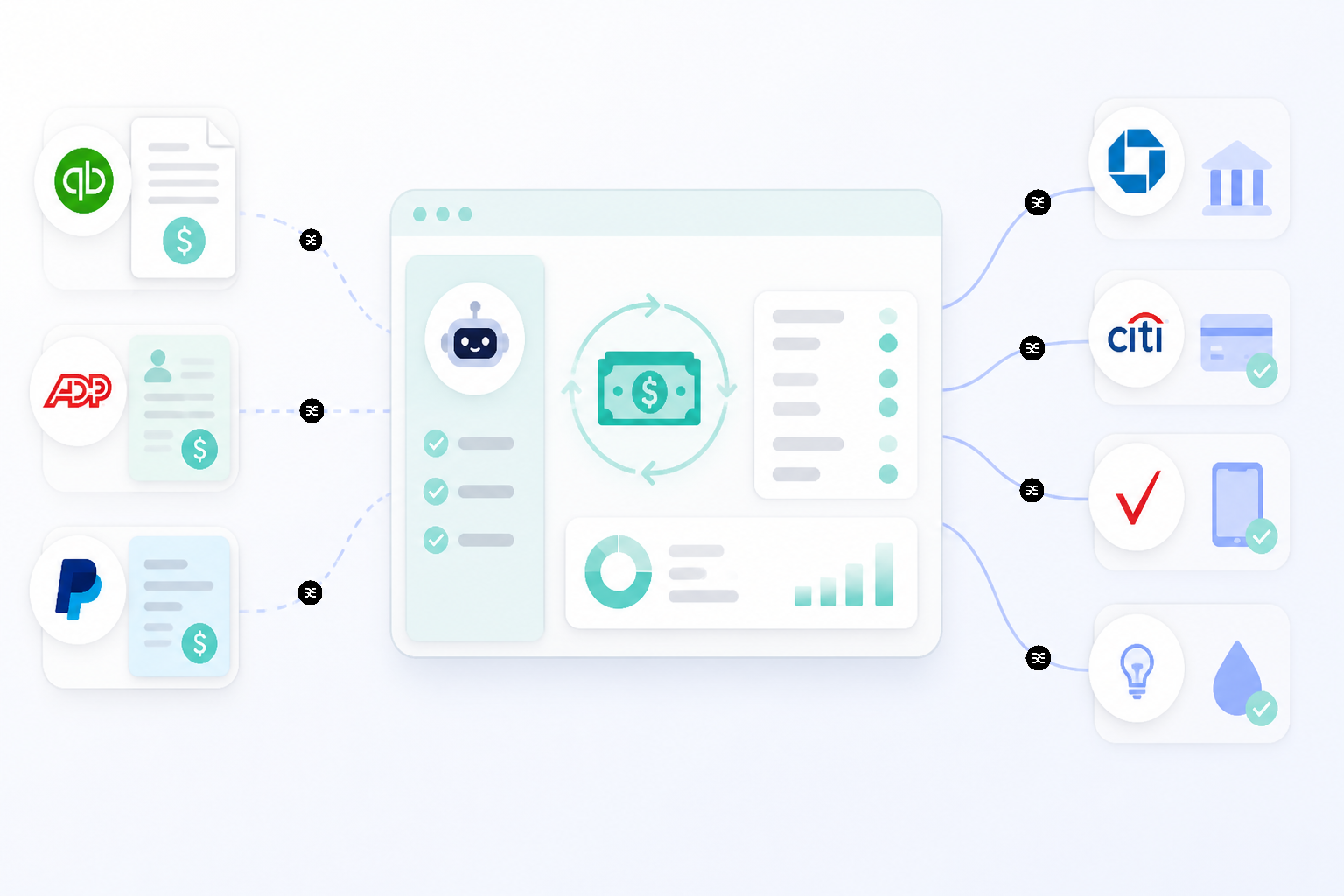
The financial landscape is undergoing a quiet but significant shift. For small business owners, freelancers, and anyone juggling multiple income streams, managing money has always been a complex, time-consuming task. But new developments in automation and artificial intelligence are changing the game.
This isn't about futuristic tech; it's a practical trend happening now. Indicates that 96% of commercial banks are already rethinking their technology, a clear signal that the entire financial system is moving toward a more automated, connected future. This evolution presents a massive opportunity to take back control, reduce manual work, and make smarter decisions with your money.
Understanding how to automate bill payments is the first step in leveraging this change for financial health.
The 2024 Federal Reserve household survey found that 63% of adults could cover a $400 emergency expense with cash, savings, or a credit card paid at the next statement. The 2026 Bureau of Labor Statistics employment report updates payroll and wage data every month across more than 100 industries, which keeps cash-flow planning tied to current labor conditions.
The Rise of AI in Business Payments
The finance function is being transformed by data, AI, and increased connectivity as companies strive for efficient, automated, and transparent treasury systems. This shift is moving businesses away from manual, repetitive tasks and toward intelligent systems that can predict cash flow, optimize payments, and reduce operational risks. It marks a fundamental change in how money is managed at a corporate level.
For years, the treasury or finance department of a company was a world of spreadsheets, manual data entry, and phone calls to banks. AI is rapidly dismantling that old model. Instead of just reacting to financial events, AI-powered systems can analyze vast amounts of data to forecast future cash positions with surprising accuracy.
This allows finance teams to be proactive, making strategic decisions about investments, debt, and expenses rather than just keeping the books balanced. The trend is toward a consolidated view of finances, where data from different payment channels and accounts are brought together for smarter, faster decision-making.
Consolidating Financial Data
One of the biggest pain points for businesses has been the siloed nature of their financial information. Money comes in through one channel, bills are paid through another, and payroll runs on a separate system. AI helps break down these walls. By consolidating payment data, businesses can gain real-time insights into their financial health. This unified view is critical for everything from managing daily operating cash to planning long-term growth. It's not just about seeing all your numbers in one place; it's about understanding the relationships between them.
The Move to Modernization
This technological pivot is so profound that nearly all commercial banks are investing in what the industry calls "payment modernization." This isn't just a minor software update. It involves rebuilding the core infrastructure to support real-time payments, richer data, and more sophisticated automation. For small businesses and freelancers, this top-down change in the banking system will create new opportunities to access tools and services that were once only available to large corporations, making it easier than ever to implement a strategy for how to automate bill payments and other financial tasks.
Streamlining Operations with Automated Invoicing and Reconciliation
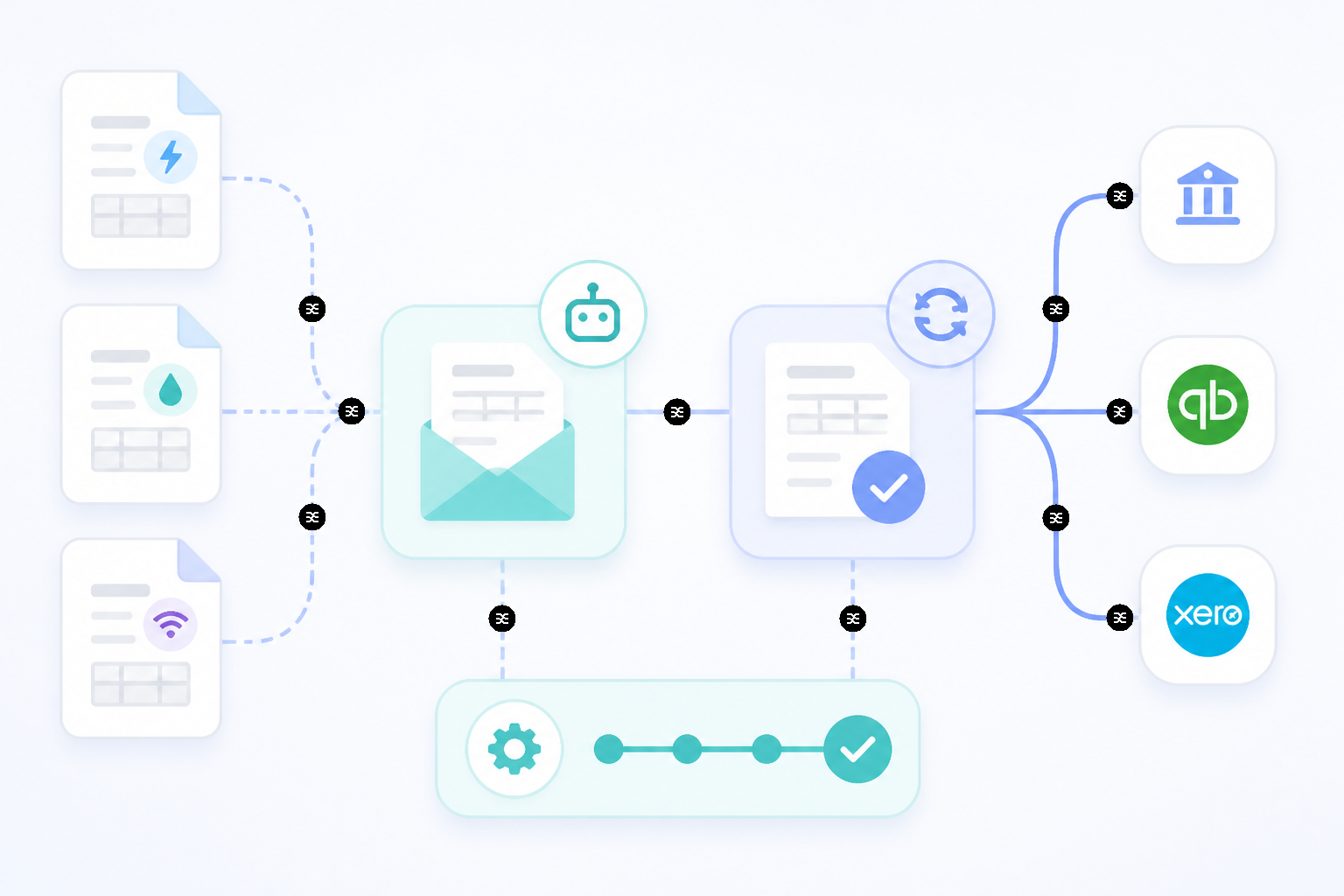 Automated invoicing and digital reconciliation are crucial tools for reducing operational costs and accelerating financial closing times. By removing manual steps from the process of sending bills and matching payments, businesses can significantly lower their expenses and get a faster, more accurate picture of their finances. This allows them to close their books more quickly at the end of each month or quarter.
Imagine the typical process for a small business: a service is rendered, an invoice is manually created in a word processor, it's emailed to the client, and then you wait. Once the check arrives, it's deposited, and an entry is made in a ledger. This entire workflow is filled with friction and potential for error.
Automation changes everything. An automated invoicing system can generate and send an invoice the moment a job is marked complete. It can also send automatic reminders for overdue payments, saving you the awkward follow-up calls.
According to a J.P. Morgan payments outlook, this kind of streamlining is a top priority for businesses looking to become more efficient. The benefits are concrete and measurable.
For example, some analyses show that automated invoicing can reduce invoice processing costs by a staggering amount. Similarly, when payments are received electronically and automatically matched to the corresponding invoice, the time it takes to reconcile accounts drops dramatically.
Cutting the Close Time
"Closing the books" is a process that many business owners dread. It involves meticulously checking every transaction to ensure everything balances. Digital reconciliation, where software automatically matches incoming and outgoing payments with invoices and receipts, makes this process far less painful. Reports suggest that using these tools can cut the time needed for financial closes significantly. This means you get a clear view of your financial performance faster, allowing for more agile decision-making. It also frees up valuable time that can be redirected toward growing the business instead of getting bogged down in administrative work. The goal of knowing how to automate bill payments is not just about paying bills on time, but also about creating a more efficient financial engine for your entire operation.
AI's Role in Fraud Detection and Payment Acceleration
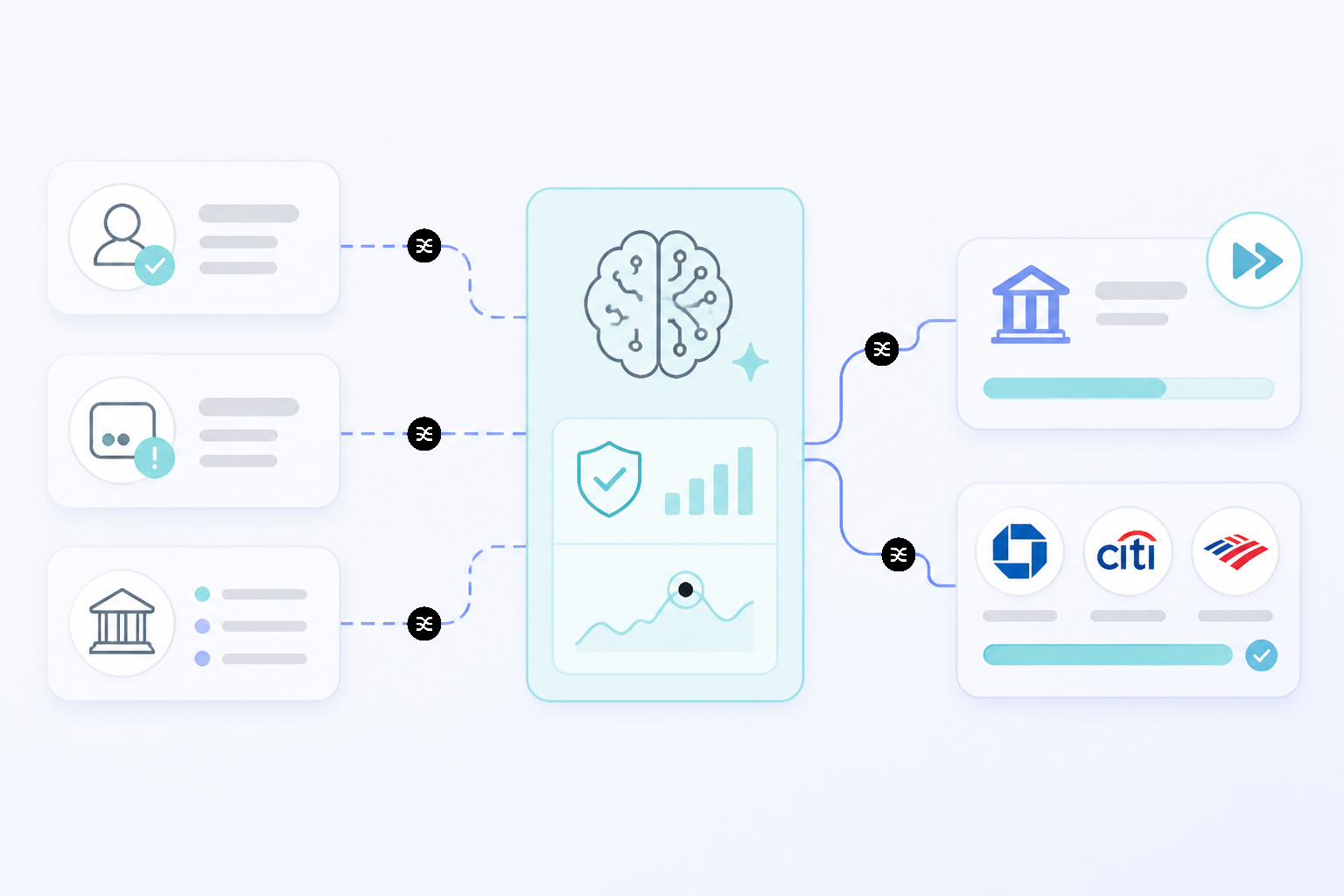 Treasury and finance executives are increasingly using AI for critical functions like customer authentication, fraud protection, and accelerating the speed of payments. By analyzing patterns and spotting anomalies that a human might miss, AI provides an essential layer of security and efficiency. Larger companies, in particular, are finding that AI is a key tool for speeding up their payment cycles.
One of the biggest anxieties in our digital world is financial fraud. For businesses that handle a high volume of transactions, this risk is magnified. AI is becoming the first line of defense.
Instead of relying on simple, rule-based flags, AI systems can analyze millions of data points in real time to assess the risk of a transaction. It learns what "normal" behavior looks like for your business and can instantly flag deviations, such as a payment being sent to a new, unverified account or an unusually large transaction at an odd hour.
This capability is a core part of the future of payments, which emphasizes security alongside speed. AI also plays a role in customer authentication, using behavioral biometrics or other advanced methods to ensure the person making a payment is who they say they are. For business owners, this provides peace of mind and reduces the potential for costly chargebacks or fraudulent losses.
Beyond security, AI is also a powerful tool for speeding things up. In traditional accounts payable departments, an invoice might sit on a desk for days waiting for manual approval. An AI system can instantly read an invoice, match it to a purchase order, confirm the delivery of goods or services, and schedule the payment, all without human intervention.
This acceleration of the payment process improves relationships with vendors and can even unlock early payment discounts. It's another example of how an intelligent approach to your finances can deliver tangible benefits. For more information on strategically automating payments, see this related guide.
Why Do People Still Prefer Manual Bill Payments?
Despite the clear benefits of automation, a surprising number of people still prefer to pay their bills manually. Research shows that nearly two-thirds of U.S. consumers favor manual processes, often citing a desire for control and a fear of overdrafts or errors.
**
It's one of the great paradoxes of modern personal finance. We have the technology to set and forget our recurring expenses, yet many of us choose a more hands-on approach. S.
Consumers often prefer manual processes over automated payments for their bills primarily due to a desire for control. Paying a bill manually allows for a final review of the charge, confirmation of sufficient account funds, and the ability to choose the exact payment date.
It's a moment of final say-so that many are reluctant to give up.
This preference is also generational. The same research reveals that younger consumers are more open to automation. For instance, 42% of Gen Z and 41% of Millennials set up automatic payments with each provider, compared to just 29% of Gen X and Baby Boomers.
This suggests a gradual shift in mindset, but for now, a significant portion of the population remains wary. The fear of an unexpected charge causing an overdraft or a company making a billing error and automatically debiting the wrong amount is a powerful deterrent.
To bridge this gap, the next wave of financial tools needs to do more than just automate; they need to provide transparency and control. People need to feel like they are directing the automation, not the other way around. This means clear notifications before a payment is made, easy ways to pause or cancel a payment, and a simple dashboard that shows exactly what is scheduled to happen and when.
The challenge is to deliver the efficiency of automation without sacrificing the peace of mind that comes with manual oversight.
Simplifying Operations and Reducing Errors with Automation
Payment automation is designed to simplify the entire payment process and reduce the incidence of human error. By using clearly defined rules to perform a large number of repeatable tasks, these systems free up employees to focus on more complex, higher-value work. This streamlines operations and creates a more efficient and accurate financial workflow.
Every manual keystroke is an opportunity for a mistake. A transposed number in an account, a misplaced decimal point in an invoice amount, or a missed payment due date can create hours of corrective work and damage relationships with vendors or customers. One of the most compelling arguments for automation is its ability to dramatically reduce these human errors.
A system that runs on logical IF/THEN rules doesn't get distracted or have a bad day. It executes its programmed tasks with precision every time.
This isn't about replacing people with machines. Instead, it's about elevating the role of your team. When employees are no longer bogged down by tedious data entry or the manual processing of payments, they can focus on tasks that require critical thinking, customer interaction, and strategic planning.
A recent analysis of bill pay trends highlights this shift, noting that automation empowers employees to handle more challenging customer service issues. This change makes your business more resilient and your team more engaged.
Consider the process of expense reimbursement. A manual system might involve saving paper receipts, filling out a form, and waiting for a check. An automated system allows an employee to snap a photo of a receipt with their phone, which is then automatically read, categorized, and submitted for approval.
Once approved, the reimbursement is sent via direct deposit. This is a simple but powerful example of how automation simplifies life for everyone involved. Applying this same logic to how you automate bill payments can have a profound impact on your business's day-to-day efficiency.
How Does Automation Enable Smarter Cash Movement?
Automation enables more efficient and intelligent cash movement by providing a centralized view of liquidity and executing transfers based on predefined rules. This allows a business to deploy cash just-in-time, such as by automatically sweeping funds to a high-yield savings account or covering a bill from a specific income source. The result is a more dynamic and responsive approach to cash management.
Traditionally, cash management has been a static process. Money sits in a primary checking account, and decisions about moving it are made manually and infrequently. This can be highly inefficient.
Excess cash in a low-interest checking account is a missed opportunity, while an unexpected debit can lead to a stressful shortfall. Automation turns this static model on its head by enabling real-time, intelligent cash movement.
By connecting all your accounts, an automated system can see your entire cash position at a glance. Industry experts note that this centralized view is the key to reducing manual processing, which is often cited as the biggest pain point in payments infrastructure.
With this complete picture, you can set up rules to manage your money proactively. " This happens automatically, ensuring your cash is always working for you.
This concept extends to what some call "just-in-time" cash deployment. Imagine you have a large bill due on the 15th of the month. Instead of setting aside the full amount on the 1st, potentially losing out on interest, you can set a rule to move the exact amount needed just before the due date.
This approach to how you automate bill payments keeps your money liquid and productive for as long as possible. The move toward real-time liquidity is even opening up possibilities for borderless liquidity, allowing international businesses to manage cash across different currencies and countries with unprecedented efficiency.
What Does the Fed's Household Report Reveal?
The Federal Reserve's report on the Economic Well-Being of U.S. Households provides a crucial snapshot of how families are managing their finances. It highlights challenges with unexpected expenses and income volatility, areas where smart automation can offer significant support.
**
Every year, the Federal Reserve conducts its Survey of Household Economics and Decisionmaking (SHED). The 2023 report paints a picture of a nation still navigating financial uncertainty. One of the key findings often revolves around how households would handle a hypothetical $400 emergency expense.
The percentage of adults who say they could cover it using cash or its equivalent is a primary barometer of financial readiness. When this number dips, it signals widespread financial fragility.
For freelancers and small business owners, this fragility is often linked to irregular income. The report consistently shows that those with variable monthly incomes, a common reality for the self-employed, have a harder time building savings and managing bills. A big client payment might create a temporary feeling of wealth, but without a system to properly allocate that money for taxes, business expenses, and personal savings, the next month can be a scramble.
This is where a thoughtful strategy for how to automate bill payments and savings becomes essential.
By setting up automated transfers, you can smooth out the peaks and valleys of a variable income. For instance, you can create a rule to automatically set aside 25% of every incoming payment for taxes, 10% for savings, and 5% for a business reinvestment fund. This disciplined, automated approach imposes order on chaotic cash flow, helping to build the kind of financial buffer the Fed's report shows is so critical for economic well-being.
It turns a lump-sum payment into a series of purposeful financial actions.
What Bureau of Labor Statistics — Employment Situation reveals
The monthly Employment Situation report from the Bureau of Labor Statistics is more than just a headline unemployment number; it shows deep trends in the labor force, including the rise of self-employment and gig work. This data highlights a growing segment of the population that lacks the traditional financial infrastructure of a steady paycheck. For these workers, personal financial management becomes an essential business skill.
When you read the Employment Situation Summary each month, you get a detailed look at the American workforce. Beyond total nonfarm payrolls, the report breaks down employment by industry, hours worked, and wages. It also contains valuable data on unincorporated self-employed workers.
This group, which includes freelancers, independent contractors, and small business owners, operates without the safety net of a traditional employer. There is no HR department to handle payroll or a finance team to manage cash flow. They are their own CFO.
This economic reality places a huge burden on individuals to manage complex financial lives. A freelancer might receive payments from five different clients in a month, each arriving on a different schedule and via a different method. This income needs to be managed to cover not only personal living expenses but also business costs, health insurance, retirement savings, and quarterly estimated taxes.
Without a robust system, it's incredibly easy for things to fall through the cracks.
Modern financial automation is designed to solve this problem. For this growing segment of the workforce, learning how to automate bill payments is not a luxury; it's a necessity for survival and growth. An automated system can act as a personal finance department, intelligently routing incoming payments to different "buckets" for taxes, savings, and operating expenses.
This systematic approach reduces the mental load and helps ensure that all financial obligations are met, even when income is unpredictable.
| Feature | Manual Bill Process | Automated Bill Process |
|---|---|---|
| Time Spent | High (manual entry, mailing, tracking) | Low (set-it-and-forget-it rules) |
| Error Rate | Higher (typos, missed due dates) | Minimal (systematic, rule-based) |
| Cash Flow View | Fragmented and delayed | Real-time and consolidated |
| Vendor Relations | Risk of late payments, strained relations | Improved with consistent, on-time payments |
What U.S. Small Business Administration — Manage Your Finances reveals
The U.S. Small Business Administration (SBA) provides foundational guidance for entrepreneurs on managing their finances, emphasizing the importance of separating business and personal funds and maintaining adequate cash reserves. These best practices are the bedrock of financial health for any small business.
**
The SBA's advice on how to manage your finances is a masterclass in business fundamentals. One of the first and most critical steps they recommend is opening a separate business bank account.
This isn't just for accounting convenience; it's about creating a clear legal and financial distinction between you and your business. It simplifies bookkeeping, protects your personal assets, and makes your business look more professional.
However, simply having a separate account is not enough. The SBA also stresses the importance of monitoring cash flow and building up a cash reserve to handle unexpected expenses or slow periods. This is where many business owners struggle.
It requires discipline to consistently set money aside when there are so many competing demands for every dollar. It's easy to look at a healthy balance in your operating account and feel a false sense of security, forgetting that much of that cash is already spoken for by upcoming tax payments, payroll, or supplier bills.
This is where automation becomes a strategic partner. You can use automated rules to enforce the SBA's advice. For example:
Separate Funds: Set up a rule to automatically transfer a fixed "owner's draw" or salary from your business account to your personal account each month.
Build Reserves: Create an automation to move 5% of every customer payment into a separate business savings account, slowly building your cash reserve without requiring active thought.
Manage Cash Flow: Use automation to ensure bills are paid on time, avoiding late fees that eat into your cash flow.
By applying automation, you're not just learning how to automate bill payments; you're building a system that institutionalizes sound financial practices.
What IRS — Small Businesses & Self-Employed reveals
The IRS provides specific guidance for small businesses and the self-employed, with a strong focus on record-keeping and the payment of estimated taxes. These are non-negotiable compliance tasks that can create significant stress and risk if mismanaged. Automating your financial systems can be one of the most effective ways to stay compliant and reduce tax-season anxiety.
For any freelancer or small business owner, the IRS Small Businesses & Self-Employed Tax Center is an essential resource. It lays out the responsibilities that come with earning income outside of a traditional W-2 job.
Perhaps the biggest adjustment for new entrepreneurs is the need to pay estimated taxes. Unlike a salaried employee who has taxes withheld from each paycheck, a business owner is responsible for calculating and paying their tax liability to the IRS four times a year.
Failing to do so, or underpaying, can result in penalties. The challenge is that it requires you to set aside a portion of your income as you earn it, rather than waiting until tax time. This takes discipline, especially when cash flow is tight.
The IRS also emphasizes the critical importance of good record-keeping. You need to be able to substantiate all your reported income and expenses in the event of an audit.
This is another area where automation can be a powerful ally. " This disciplined, automated approach ensures the money is there when your quarterly payment is due. It removes the guesswork and the temptation to spend your tax money on other things.
Knowing how to automate bill payments and tax savings transforms a major source of stress into a manageable, background process.
What Consumer Financial Protection Bureau — Consumer Tools reveals
The Consumer Financial Protection Bureau (CFPB) offers a wealth of resources and tools designed to help consumers navigate the financial system safely. Its guidance on bank accounts, transfers, and consumer rights provides an important framework for understanding the protections in place as payment systems become more automated. This knowledge empowers you to use new financial tools with confidence.
The financial world can feel like a maze of complex rules and fine print. The CFPB's consumer tools exist to make that maze more navigable. The agency provides clear, plain-language explanations of how different financial products work, from checking accounts and overdraft rules to the mechanics of ACH transfers.
For anyone looking to embrace financial automation, this information is invaluable. Understanding your rights and the rules of the road is the first step to using any tool effectively.
For example, the CFPB has specific regulations governing preauthorized electronic fund transfers, which are the formal name for many automatic bill payments. These rules give you the right to stop a payment before it is made and outline the procedures for disputing errors. Knowing these protections can help alleviate some of the anxiety around giving companies permission to debit your account.
It's a reminder that while the process is automated, you are still in control.
As you explore how to automate bill payments, it's wise to think like a regulator. Consider the transparency and control offered by any tool or service you use. Does it provide clear notifications before payments are made?
Is it easy to modify or cancel a recurring transfer? Does it give you a complete and an easily accessible history of all transactions? The principles of consumer protection championed by the CFPB—clarity, transparency, and control—are the same principles you should look for in a modern financial automation system.
The goal is to find a solution that offers the efficiency of automation while upholding your right to be fully informed and in charge of your money.
What Navigating 2025: Key Payment Trends, Challenges, and Insight reveals
Emerging payment trends show that while digital and mobile options are growing, there is no one-size-fits-all solution for how people want to pay their bills. Consumers expect to have a variety of choices, from credit cards to direct bank transfers, available across different channels. This highlights the need for flexible, intelligent systems that can manage money across multiple accounts and payment types.
The world of payments is becoming more diverse, not less. A report on consumer payment trends for 2025 and beyond makes it clear that people appreciate having options. Credit and debit cards remain popular, but direct bank payments (ACH) and digital wallets are also widely used.
The channel matters, too; some people prefer to pay on a company's website, others through a mobile app, and some directly from their bank's bill pay center. This variety can create complexity for a small business owner or freelancer who needs to manage money coming in and going out through multiple pathways.
This trend is especially visible in the rise of mobile payments. Mobile bill pay usage has seen steady growth recently, showing a clear shift toward managing finances on the go. This shift adds another layer to the financial puzzle.
An intelligent financial system needs to be able to accommodate all these different methods and channels, providing a single, coherent view of your money no matter how it moves. This is where modern automation platforms can excel.
For example, some tools allow you to connect all of your bank accounts into a single visual map. You can then build simple "IF/THEN" rules to automatically move money between them. This approach embraces the complexity of the modern financial system.
Instead of trying to force all your activity through a single account, it allows you to orchestrate your cash flow across all your accounts intelligently. You can set a rule to pay a credit card bill from your primary checking account, fund your tax account from incoming client payments, and sweep any leftover cash into a high-yield savings account, all automatically. This is how to automate bill payments in a way that truly simplifies your financial life.
Preparing for the Future of Automated Finance
The shift toward a more automated, intelligent, and connected financial system is well underway. For small business owners, freelancers, and individuals managing complex incomes, this is not a trend to watch from the sidelines. It is an opportunity to fundamentally change your relationship with money management, moving from a reactive, time-consuming process to a proactive, strategic one.
The tools are no longer reserved for large corporations; they are becoming more accessible every day.
Embracing this change starts with a mindset shift. Instead of seeing your finances as a series of disconnected accounts and transactions, begin to view them as a single, dynamic system. The goal is to get your money to work for you, moving to the right place at the right time with minimal manual effort.
Whether it's ensuring bills are paid on time, systematically building savings, or staying compliant with tax obligations, automation provides a framework for discipline and efficiency.
The journey begins with small steps. Pick one recurring financial task that causes you stress or consumes too much time, and explore how you could automate it. As you build confidence and see the benefits, you can gradually build a more comprehensive system.
The future of finance is one where you are the architect of your cash flow, not just a passive observer. By learning how to automate bill payments and other financial flows, you can reclaim your time and focus on what truly drives your success.