Intelligent Invoice Payment Methods
By Ari Schlacht ·
Invoice payment methods has shifted noticeably over the last few years for the business is growing but finance admin is draining, and the practical implications for cash flow, automation, and account structure are worth a closer look.
The old way of managing invoice payments is time-consuming and prone to errors. But a new era of smarter, more automated payment methods is here, designed to work with the complex financial lives of modern entrepreneurs. It's about making the system work for you, not the other way around.
AI Agents Transforming Invoice Payments with New Protocols
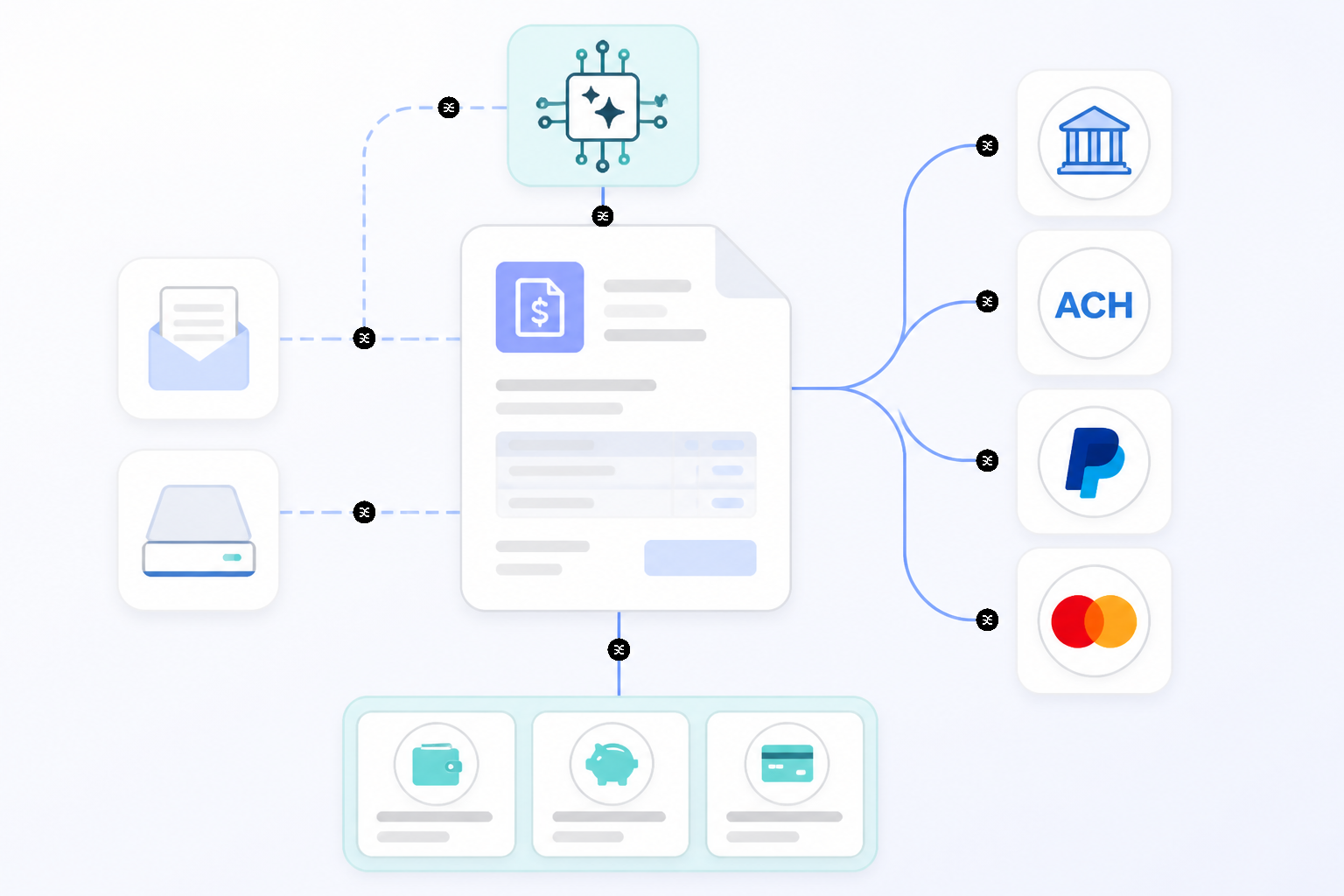
The fundamentals of how money moves are being rewritten to let software act on your behalf. Major financial players like Visa, Stripe, and Google have developed new protocols, or rule sets, that allow approved AI agents to securely transact directly using the banking system's core infrastructure. This represents a significant step beyond simple app-based payments, paving the way for truly automated invoice payments.
For years, automation meant scheduling a payment on a specific date. This new development is different. Imagine an intelligent agent that not only sends an invoice but also understands the terms.
It could, for example, verify that a project milestone is complete, confirm the client has received the deliverable, and then initiate the payment process from the client's pre-authorized account without either of you lifting a finger. This is what transacting "on the rails" means: working directly with the trusted networks that banks use, like ACH, but with a new layer of intelligence.
This shift toward "Pay-by-Bank" models, as noted in Federal Reserve research, offers a more direct and potentially lower-cost alternative to traditional card networks for merchants. By allowing authorized agents to initiate payments, the source explains that these systems can reduce the steps, and costs, involved in a transaction. For a small business managing dozens of invoices, this efficiency adds up quickly, freeing up both cash flow and administrative time.
The key is that these agents aren't just firing-and-forgetting. They operate based on rules and conditions you set, adding a layer of logic to the payment process. This creates a more reliable and predictable financial operation for freelancers and SMBs who need to manage inconsistent income and complex project-based billing cycles.
The age of the passive invoice is ending, replaced by an active, intelligent payment process.
American Express Enhances B2B Payments and Reporting
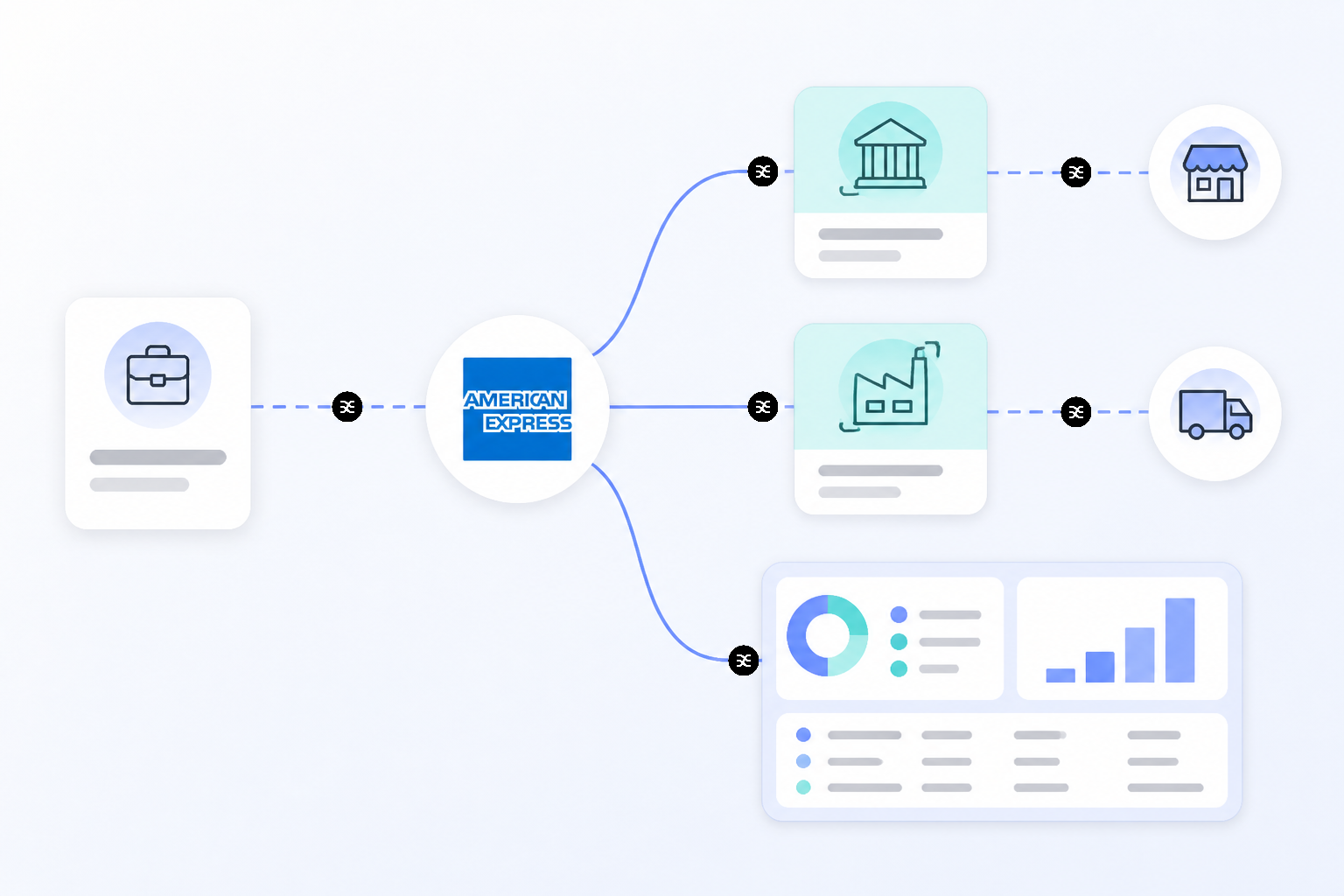 In this new environment, established financial companies are also creating more intelligent tools for business-to-business transactions. American Express, for example, has enhanced its Buyer Initiated Payments (BIP) feature, which streamlines how larger clients pay their smaller suppliers and freelancers. This system combines payment processing with automated invoice reporting, reducing the manual work for everyone involved.
Traditionally, getting paid by a large corporate client involved navigating their complex accounts payable department, often leading to delays and confusion. The BIP model flips the script. It allows the buyer (your client) to securely initiate payments to you (the supplier) through a system that automatically captures and reconciles invoice data.
This system significantly reduces the time suppliers spend creating statements, sending payment reminders, or attempting to match unreferenced payments with outstanding invoices.
Of payment trends shows a clear move toward integrated digital solutions in the B2B space. Businesses are no longer satisfied with payment methods that just move money.
They demand systems that also provide data, reporting, and reconciliation to simplify their accounting. Automated invoice reporting directly addresses this need, turning a simple payment into a rich data transaction that plugs directly into your financial records.
For a freelancer or small business, this is a welcome change. It professionalizes the payment experience and puts you on equal footing with larger suppliers. When your client uses a system like this, your payment is no longer a manual task on someone's to-do list; it's an automated part of their workflow.
This leads to more predictable cash flow, fewer administrative headaches, and a stronger client relationship built on efficiency and trust.
Digital Wallets Reshaping Consumer Billing and Payments
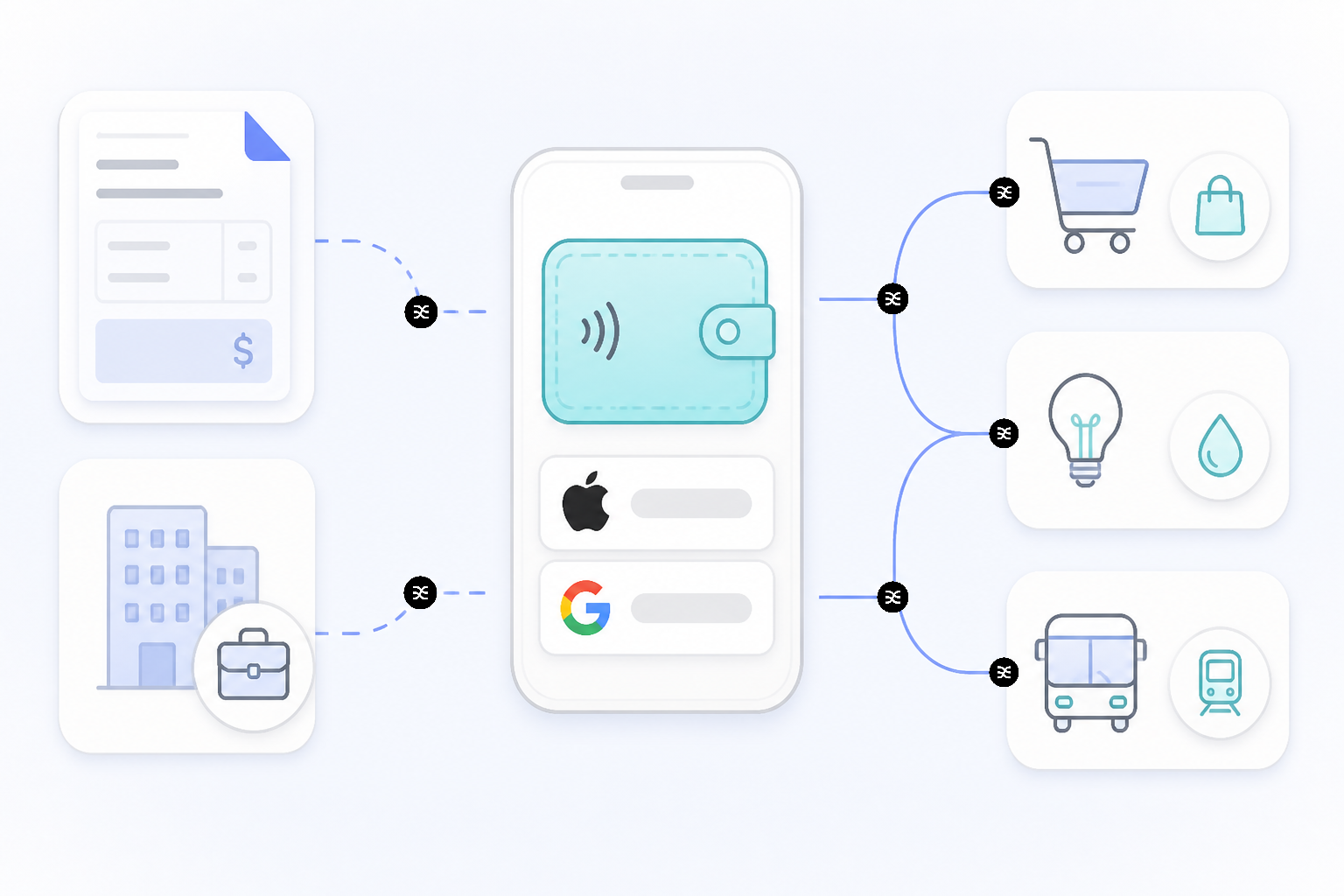 The demand for smarter payments isn't just a B2B trend; it's also being driven by consumer habits. The rising preference for digital wallets like Apple Pay and Google Pay, especially among younger generations like Gen Z, is fundamentally changing expectations for how all bills and invoices are paid. People now expect a one-click, secure, and mobile-friendly payment experience in every part of their lives, including when they pay a contractor or local business.
Think about the last time you paid for a coffee or an online order. You likely used a digital wallet or a saved card, a process that took seconds. When that same person receives an invoice from you that requires them to manually enter a 16-digit card number, an expiry date, and a CVC, the friction is noticeable.
According to the source, the future of payment processing is increasingly mobile and wallet-centric. Businesses that don't adapt risk looking outdated and making it harder for customers to pay them.
This shift has two major implications for your business. First, your invoicing platform must support these modern payment methods. If your invoices only offer bank transfers or traditional card entry, you're missing an opportunity to get paid faster.
Second, it highlights the need for integrated systems. Manually processing a single invoice can take days and significant administrative effort, as our related guide on the topic points out. Digital wallets, when integrated properly, can automate the entire reconciliation process.
For freelancers and SMBs, offering digital wallet payments is no longer a nice-to-have; it's a competitive necessity. It signals that you are professional, modern, and easy to work with. More importantly, by reducing the friction for your clients, you shorten the payment cycle and improve the consistency of your cash flow, which is the lifeblood of any small business.
Intelligent Payment Solutions Beyond Basic Automation
As payment technology evolves, the distinction between basic automation and true intelligence is becoming clearer. Intelligent billing and payment solutions go beyond simply scheduling a transaction; they offer features like ongoing analysis, enhanced security, and the ability to adapt to changing conditions. For a business owner juggling multiple clients and income streams, this intelligence is crucial for maintaining financial health.
Basic automation is a blunt instrument. It can, for example, pay a bill on the 15th of every month. An intelligent system, however, can analyze your cash flow and decide the optimal time to pay that bill to maximize your working capital without incurring late fees.
It can flag unusual transactions, suggest ways to consolidate payments to save on fees, and provide a clear picture of your financial position in real-time. This is what sets an automated billing systems example apart from a simple scheduler.
The 2024 Payment Methods Report emphasizes that the modern economy is tech-driven, with payment methods at its core. It highlights the move towards solutions that offer unique advantages beyond the transaction itself, such as enhanced data and security. For a small business, this could mean a system that not only processes payments but also helps you identify your most profitable clients or spot seasonal cash flow trends.
This level of insight is invaluable. Instead of just reacting to financial events, you can start anticipating them. An intelligent payment system can act as a financial co-pilot, helping you navigate the complexities of irregular income and variable expenses.
It's about building a resilient financial operation that supports your business goals, rather than just a simple system for moving money in and out.
Streamlining Payments with AutoPay and Digital Wallets
Businesses can achieve significant cost savings and efficiency by embracing advanced features like AutoPay and digital wallets. These tools don't just make it easier for clients to pay; they streamline your entire accounts receivable process, reducing administrative overhead and accelerating cash flow. For a small business owner, this means spending less time on paperwork and more time on revenue-generating work.
Adopting these modern invoice payment methods directly impacts your bottom line. AutoPay, for instance, allows clients to pre-authorize recurring payments for retainers or subscription services. This eliminates the need to send monthly invoices and reminders, guaranteeing on-time payment and creating a predictable revenue stream.
Digital wallets offer a similar benefit for one-off projects, drastically reducing the time it takes for a client to act on an invoice.
The averseness to friction is clear in global payment data. For cross-border purchases, for instance, preferences are split between different convenient options: 39% of consumers use credit cards, 26% prefer digital wallets, and 23% use debit cards, according to one source. By offering all these options seamlessly, you cater to your client's preference and remove any hesitation they might have.
This is more than just convenience. Every hour you spend manually creating an invoice, sending a reminder, and reconciling a payment in your accounting software is an hour you can't bill to a client. By automating this workflow, you reclaim that time.
The efficiency gains are enormous, especially for solo operators or small teams where every minute counts. It's a strategic move that makes your business more scalable and profitable.
Addressing the Challenge of Failed Payment Tracking
One of the most significant, yet often overlooked, challenges in managing accounts receivable is tracking and resolving failed payments. A staggering 41% of companies don't even track failed payments, primarily because they find it too difficult to find a solution to resolve the issue. This inaction directly translates to lost revenue and can create serious cash flow problems for small businesses and freelancers.
A failed payment is more than just a temporary setback; it's a hole in your revenue forecast. It could be due to an expired credit card, insufficient funds, or incorrect bank details. However, many businesses simply write off these failures as a cost of doing business, assuming the effort to recover the payment is too high.
This is a costly mistake, as top-performing merchants who do track these issues are able to recover a significant portion of what was lost.
Why Failed Payments Go Unchecked
The core of the problem, as highlighted by the source, is complexity. Without an automated system, resolving a failed payment is a manual, multi-step process. 1.
Identify the failure: You first need to notice that the payment didn't go through, which might not be obvious if you aren't checking your bank statements daily. 2. Diagnose the cause: You have to figure out why it failed.
Was it the client's card or a problem with your payment processor? 3. Contact the client: This is often the most awkward step.
You have to reach out, explain the situation, and ask them to take action, which can strain the client relationship. 4. Re-process the payment: Finally, you have to try again, hoping the issue is resolved.
This manual chase is what leads so many businesses to give up. However, modern payment platforms can automate this entire dunning process. They can automatically retry a card, notify the client of an issue with a secure link to update their details, and give you a clear dashboard of all outstanding and failed payments.
Turning this black hole of lost revenue into an automated recovery process is one of the most powerful upgrades you can make to your financial toolkit.
What Federal Reserve Data on Household Well-Being Reveals
**The Federal Reserve's annual report on the economic well-being of U.S. households provides crucial context for why effective invoice payment methods are so important. It shows that many Americans, especially those who are self-employed, deal with income volatility, making proactive financial management a necessity, not a luxury.
**
S. Households report underscores the financial fragility many people face. It details how families handle unexpected expenses and manage month-to-month cash flow.
For the millions of freelancers and small business owners who are, in essence, a "household of one," these findings hit close to home. An unpaid invoice isn't just a line item on a spreadsheet; it's a direct threat to paying your mortgage, bills, and saving for the future.
This reality highlights the weakness of traditional invoicing. Sending a PDF and waiting 30, 60, or 90 days for payment introduces a massive amount of uncertainty into your personal finances. You are effectively providing your clients with a zero-interest loan, while your own financial stability hangs in the balance.
The stress this creates can be immense, taking your focus away from your actual work.
An intelligent payment system helps smooth out this volatility. By making it easier for clients to pay on time, offering incentives for early payment, and automating the follow-up on late invoices, you shorten the gap between doing the work and having the cash in your bank. This brings a level of predictability and control that is essential for weathering the natural ups and downs of self-employment.
It's about building a financial buffer against the uncertainty described in the Fed's data.
What Bureau of Labor Statistics Employment Data Reveals
Recent employment data from the Bureau of Labor Statistics paints a clear picture of a changing workforce, with a significant number of people engaged in freelance, contract, or "gig" work. This structural shift in the labor market means that more people than ever are responsible for their own billing and collections. Traditional employment comes with a bi-weekly paycheck; entrepreneurship comes with a stack of invoices.
The monthly Employment Situation summary, while focused on payroll employment, also provides insight into the scale of self-employment and contingent work. These individuals are the backbone of the modern service economy, providing specialized skills to businesses of all sizes.
However, they operate without the support of a corporate finance department. They are their own CEO, COO, and CFO, responsible for everything from marketing to execution to getting paid.
This makes the choice of invoice payment methods a critical business decision. For this growing segment of the workforce, time spent on administrative tasks is time not spent on billable work. A clunky, manual invoicing process directly reduces their earning potential.
Furthermore, inconsistent payment cycles make it incredibly difficult to manage personal and business finances, budget for taxes, and invest in growth.
The tools built for a W-2 world simply don't fit the needs of this entrepreneurial class. They require flexible, automated, and intelligent systems that recognize the unique challenges of having multiple income streams and variable payment timelines. The rise of the independent worker is a powerful tailwind for the adoption of smarter financial tools that automate the drudgery of collections and allow them to focus on what they do best.
What the U.S. Small Business Administration Guide Reveals
The Small Business Administration offers clear guidance on a foundational principle of financial health: managing your cash flow effectively. While the SBA provides broad advice, the underlying message is that a business cannot thrive without a clear picture of its finances and a reliable system for getting money in the door. This is where modernizing your invoice payment methods becomes a strategic imperative.
In its resources on how to Manage Your Finances, the SBA stresses the importance of monitoring cash flow, forecasting income, and getting paid on time. They advise business owners to make invoicing clear and immediate.
This official advice validates the everyday experience of entrepreneurs: cash is king, and waiting for it is a recipe for stress and potential failure. The gap between sending an invoice and receiving payment is one of the biggest risks a small business faces.
Old-school invoicing—sending a document and passively waiting—works directly against the SBA's advice. It creates ambiguity and delay. A modern approach, using automated systems, tightens this loop.
For example, some platforms can automatically send an invoice the moment a project is marked as complete. They can then send polite, automated reminders on a predetermined schedule, and finally, escalate overdue notices if needed. This systematic approach professionalizes your collections process without requiring manual intervention.
This is where a smart financial router can make a difference. Tools like Sequence allow you to create rules that automatically move money between accounts based on payments received. For example, you can set up a rule to instantly transfer 25% of every paid invoice into a separate account for taxes.
This aligns directly with SBA guidance to plan for expenses and builds a resilient financial system for your business, turning the reactive process of getting paid into a proactive strategy for financial management.
What IRS Guidance for Small Businesses Reveals
The IRS provides extensive resources for small businesses and the self-employed, and a recurring theme is the critical importance of meticulous record-keeping. Every dollar that comes in and goes out must be tracked for tax purposes. A disorganized approach to receiving payments can quickly become a nightmare during tax season, potentially leading to overpayment or, worse, an audit.
According to the Small Businesses & Self-Employed tax center, business owners must keep records of their gross receipts. This includes invoices, bank deposit slips, and receipt books. When you receive payments through a patchwork of methods—a check from one client, a direct deposit from another, and a mobile payment app from a third—reconciling these into a single, accurate picture of your income is a huge challenge.
An integrated invoice payment system solves this problem. When all your payments are processed through a single platform, you automatically get a clean, consolidated record of all your revenue. The system generates reports that show who paid you, how much they paid, and when.
This creates a single source of truth for your income, making it dramatically easier to calculate your quarterly estimated taxes and fill out your Schedule C at the end of the year.
Furthermore, the IRS is clear about the need to separate business and personal finances. When a client payment lands in your personal checking account, it's easy for funds to get co-mingled, creating a messy accounting situation. Modern payment systems can be configured to deposit funds directly into your designated business account, enforcing this crucial separation and keeping your financial life organized.
This discipline isn't just good practice; it's essential for complying with tax law and protecting your business.
What the Consumer Financial Protection Bureau's Tools Reveal
The work of the Consumer Financial Protection Bureau (CFPB) offers a valuable window into what a fair and transparent financial transaction looks like. While focused on consumer protection, the principles they champion—clarity, security, and control—are exactly what your clients expect when they pay your invoice. Meeting these expectations is key to building trust and ensuring a smooth payment experience.
The CFPB's Consumer Tools and research reports often focus on issues like unauthorized transfers, confusing fee structures, and the security of payment systems. This reflects a public desire for financial interactions that are straightforward and safe. When you send an invoice, you are initiating one of these financial interactions.
A professional-looking invoice with a link to a secure, modern payment portal gives your client confidence. A hastily written email asking for their credit card number does not.
Consider the different payment rails available for your business to use. Each comes with its own speed, cost, and data richness, affecting both you and your client.
| Feature | ACH Transfer | Wire Transfer | Card Payment |
|---|---|---|---|
| Typical Cost | Low (often < $1) | High ($15 - $50) | Medium (1.5% - 3.5%) |
| Speed | 1-3 business days | Same day, often hours | Instant authorization |
| Reversibility | High (can be reversed) | Low (difficult to reverse) | Medium (chargebacks) |
| Data Included | Limited | Limited | Rich transaction data |
This table illustrates the trade-offs. While an ACH transfer is cheap, it's slow. A wire is fast but expensive.
An intelligent payment system helps you offer the right options to your client, balancing speed, cost, and security, thereby aligning with the principles of transparency and choice that the CFPB advocates for. It shows respect for your client's money and their peace of mind.
What Payment Processing Statistics Reveal
Industry statistics confirm that the shift to digital and automated payments is not a temporary trend but a fundamental reshaping of commerce. Data on payment processing growth and preferences indicates that businesses not only need to accept digital payments but must also do so efficiently and intelligently. For freelancers and SMBs, this means the tools you use to get paid are as important as the service you provide.
The global payment processing market is expanding rapidly, with North America being a major component of this growth. The digital payment landscape is booming, with research estimating that a large percentage of consumers in major economies prefer digital methods.
When a client receives your invoice, they are in a consumer mindset, and they bring those preferences with them. As one source on payment statistics puts it, when looking at cross-border payments, 26% of global consumers already prefer using digital wallets.
The Growing B2B Digital Market
This trend is even more pronounced in the business-to-business space. The B2B digital payments market is predicted to grow at a significant rate, increasing notably in size between 2025 and 2033. This growth isn't just about replacing paper checks with bank transfers.
It's driven by the adoption of sophisticated platforms that integrate payments with accounting software, automate reconciliation, and provide valuable data analytics.
For a small business owner, these statistics should be a call to action. Your clients, whether they are individuals or large corporations, are rapidly moving away from manual payment processes. To stay competitive and ensure consistent cash flow, your business must align with this trend.
Relying on outdated invoice payment methods is like trying to compete in a car race on a bicycle. You may eventually get there, but you'll be left far behind by those using more advanced machinery.
Looking Ahead: The Future of Your Finances
The evolution of invoice payment methods from static documents to intelligent, automated systems is more than a technological curiosity. It's a fundamental change that puts you, the business owner, back in control of your financial destiny. This shift is about turning a reactive, often stressful process into a proactive, strategic part of your business operations.
By adopting tools that leverage AI, offer modern payment options like digital wallets, and automatically handle challenges like failed payments, you do more than just get paid faster. You reclaim countless hours of administrative work, reduce the mental strain of chasing down money, and gain a clearer, more accurate picture of your business's financial health. This allows you to make better decisions, from planning for taxes to investing in growth, all based on real-time data, not guesswork.
The financial system can feel complex and stacked against the individual, but these new tools are designed to level the playing field. They give freelancers and small business owners the kind of sophisticated financial machinery that was once only available to large corporations. Embracing this future isn't just about keeping up with technology; it's about building a more resilient, profitable, and sustainable business.