Solving the Business Financial Execution Gap
By Liza Zautner ·
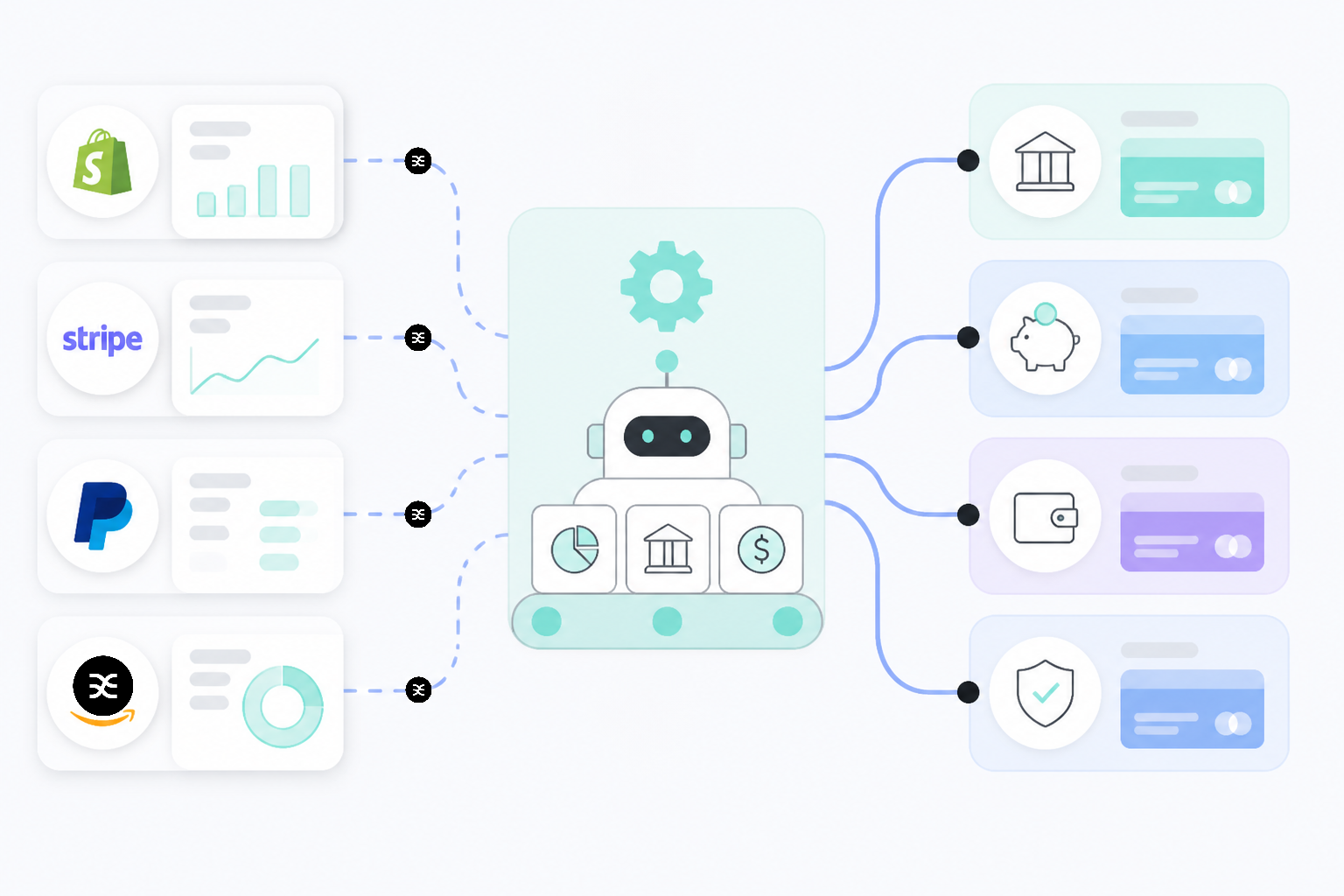
Fully autonomous business financial execution gap has shifted noticeably over the last few years for the solopreneur running a business on ai agents, and the practical implications for cash flow, automation, and account structure are worth a closer look.
There's a massive disconnect between what software can think about and what it can do. This is the fully autonomous business financial execution gap, and it represents the last manual mile in your financial workflow.
AI's Promise: Smart Money, Stalled Execution
The core problem is that most AI-powered financial tools are built for analysis, not action. They function as smart advisors that can identify what needs to be done with your money, but they lack the permissions and integrations to actually execute the transfers, payments, and savings sweeps themselves.
We've been given a powerful financial brain without the hands to carry out its instructions. Think of the AI agent stack you might use today. One tool might scan your invoices and project your income.
Another might categorize your spending and tell you where you can cut back. A third might even calculate your quarterly estimated tax payments down to the dollar. But when it comes time to actually set that tax money aside, the entire automated chain comes to a halt.
The final instruction is for you to perform the task.
This stall happens at the bank's front door. For decades, the financial system has been built on the idea that only a human should authorize money movement.
This makes sense for security, but it's a model from a pre-digital era. " According to insights from McKinsey on financial services, while digital adoption has soared, the underlying plumbing that allows software to act on a user's behalf has lagged.
This leaves business owners in a frustrating position. "
But in each case, the AI agent stack stops at the bank. The system can think about money, but it cannot move it. That last, crucial step falls to you, the one person whose time is the most valuable and scarce resource in the business.
What Does the Execution Gap Mean for Solopreneurs?
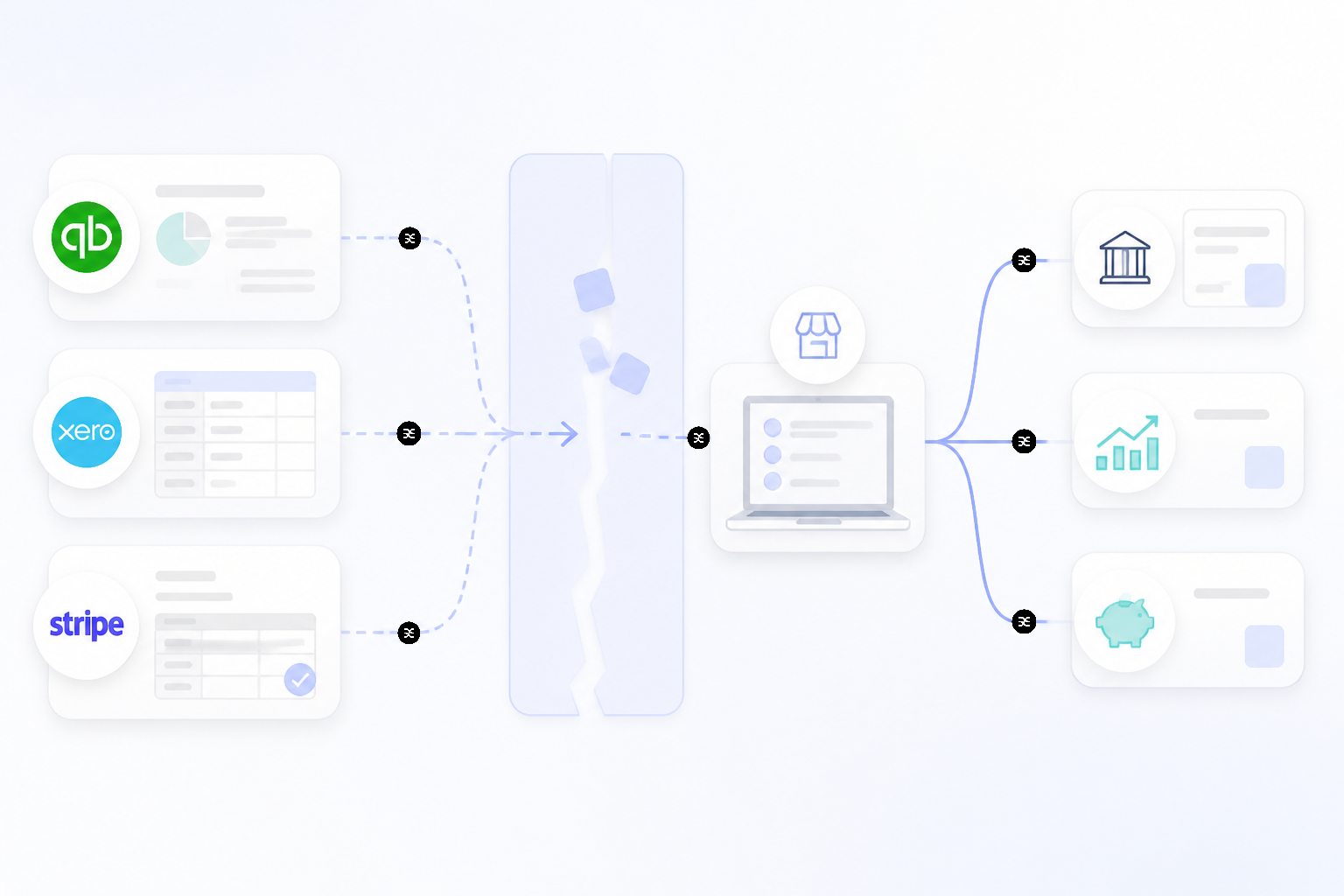 For solopreneurs and small business owners, the financial execution gap means you are the final, manual link in your own automation chain. Despite using sophisticated software for invoicing, accounting, and projecting, you are forced to act as the human API, manually logging into bank accounts to execute the strategies your tools recommend.
This manual last step is more than just an inconvenience; it's a significant drain on time and a major source of potential error. Imagine a freelance graphic designer who just received a large project payment. Her accounting software correctly logs the income.
Her project management tool marks the project as complete. But her financial system stops there.
It's now her job to manually perform several critical tasks:
- Log into her primary business checking account. 2.
Calculate the correct percentage to set aside for federal and state taxes. 3. Initiate a transfer from the checking account to a separate tax savings account.
- Decide how much to pay herself and transfer that amount to her personal account. 5.
Move a portion of the remainder into a business savings account for future quiet periods or large expenses.
Each step requires her to be a disciplined, error-free accountant, even when she's busy finding her next client. The Small Business Administration advises business owners to meticulously manage their finances by separating funds and maintaining reserves, but the current financial system offers few tools to automate this vital process.
The Cost of Manual Intervention
This reliance on manual bank logins introduces significant friction. It's not just about the five or ten minutes it takes to perform the transfers. It's the cognitive load of having to remember to do it, the mental math required to do it correctly, and the risk of simply forgetting during a busy week.
This is where small mistakes can cascade into big problems, like under-saving for taxes or accidentally spending money that was earmarked for operating expenses. The promise of solopreneur automation breaks down at this exact point, forcing the owner to become a bottleneck.
Why Do Compliance Rules Create Financial Bottlenecks?
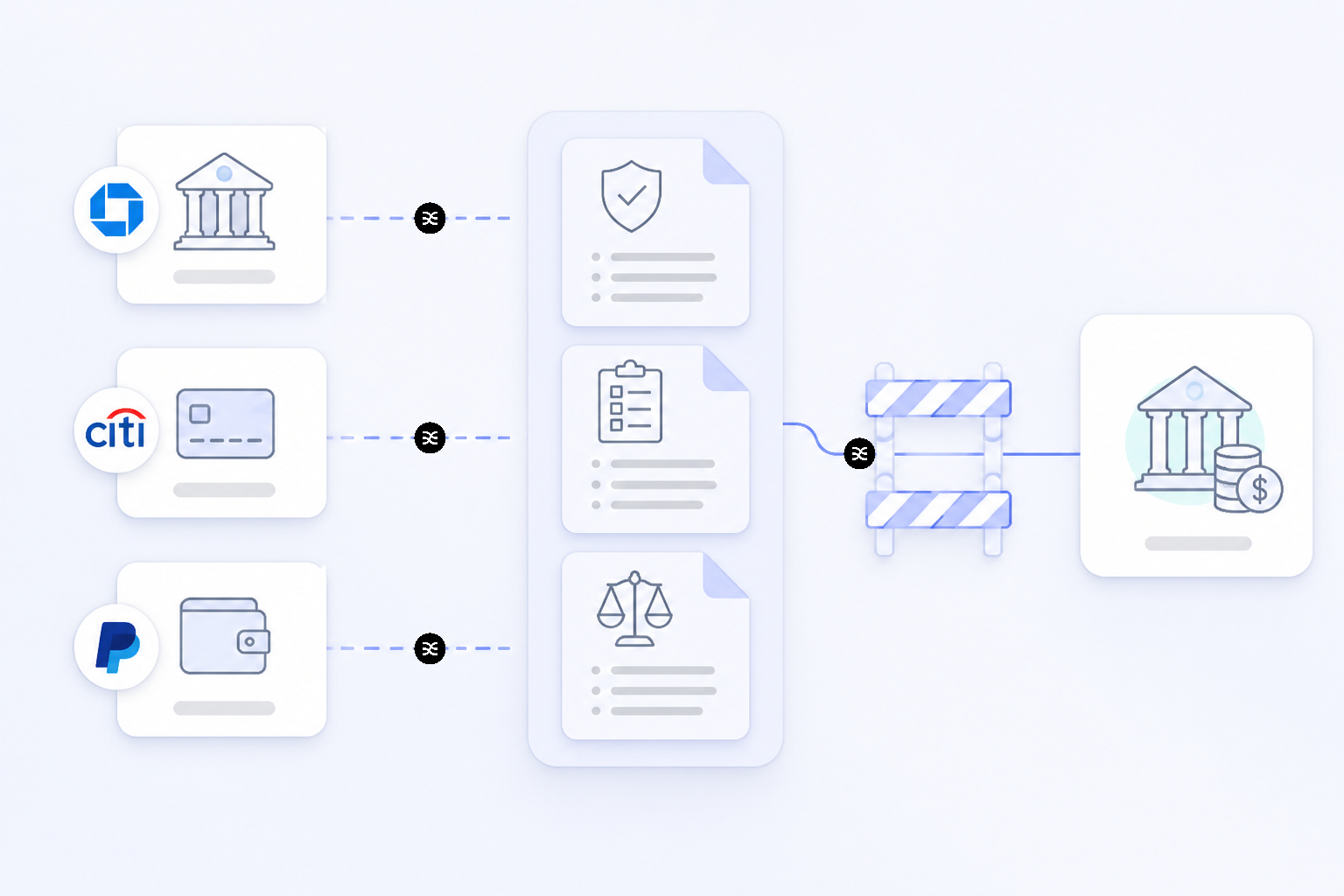 Financial institutions face a deep-seated challenge where compliance and risk-management frameworks, designed for an older, human-centric banking model, create bottlenecks that prevent the full adoption of autonomous finance. AI is often used to enhance monitoring and reporting for compliance, but firms are hesitant to grant it the authority to execute transactions without a human in the loop.
It's a classic case of the rules not keeping pace with the technology. In a survey highlighted by Redwood Software, a staggering 91% of financial services firms say that automation improves compliance.
They recognize that software is faster, more accurate, and more consistent at applying rules than any human could be. Yet, the same industry is struggling to put that knowledge into practice.
The numbers reveal the chasm between ambition and reality. While the vast majority of financial leaders see the potential, research from FinTech Global shows that just 32% have scaled automation beyond pilot programmes.
This "55-point execution gap" is a massive hurdle. Further reporting indicates that Research indicates that only 18% of banks have fully operationalized AI, leaving most institutions stuck in a state of perpetual experimentation.
This internal hesitation has a direct impact on you, the end user. The systems that banks use to protect consumer funds, governed by regulations from bodies like the Consumer Financial Protection Bureau, were not designed for a world where a customer might want their software to automatically move money between their own accounts based on a set of pre-approved rules.
The architecture is built around preventing unauthorized access from the outside, not facilitating authorized automation from the inside. This creates a challenging environment for innovation, slowing the development of the very tools that could solve the financial execution gap.
Integrating AI for End-to-End Autonomous Finance
The only way to close the financial execution gap is to move beyond isolated AI tools and toward integrated systems that achieve end-to-end autonomous finance. This requires connecting the AI 'brain' that makes decisions with the financial 'hands' that can securely access payment rails and execute transactions.
Today's landscape is fragmented. You have an accounting app, a budgeting tool, and a banking portal, and none of them truly speak to each other in a way that allows for action. An integrated system, however, would unify these functions.
It would see the invoice payment land (accounting), recognize it matches a rule you created (budgeting), and execute the corresponding transfer (banking).
This is a significant technical challenge. It involves more than just a slick user interface; it requires building a new layer of intelligent infrastructure on top of the existing financial system. The core task is to give software the ability to programmatically interact with a user's bank accounts, but in a way that is secure, compliant, and completely controlled by the user.
Connecting the Brain to the Bank
This integration is heavily dependent on the "plumbing" of the financial world. Payment systems like the Automated Clearing House (ACH) network were built for large, slow batch processes, not the real-time, intelligent transfers that autonomous finance demands. While a modern view on ACH payment integration shows progress is being made, the infrastructure was not originally designed for this kind of agility.
A truly autonomous system must be able to:
- Authenticate securely: Access a user's accounts without storing sensitive credentials. * Read data in real time: See balances and transactions as they happen. * Execute instructions: Initiate transfers and payments based on user-defined logic.
Achieving this requires deep integration with both data aggregators and the payment networks themselves, creating a single, cohesive platform where financial plans can be turned into financial actions automatically.
How Does Autonomous Finance Reduce Costs?
By automating routine financial tasks, autonomous finance platforms dramatically reduce execution costs tied to manual labor and human error. Furthermore, these systems offer constant, 24/7 availability that no human staff could ever match, ensuring financial rules are executed with perfect consistency and timing.
The financial impact is compelling. According to market data from DataIntelo, institutions that implement comprehensive autonomous finance platforms report significant operational gains. They see process completion times fall by 30–50% and operational errors drop by 20–40%.
For a small business owner, this translates directly into time saved and costly mistakes avoided.
Consider the difference between a manual and an autonomous approach to managing a payment.
| Metric | Manual Execution | Autonomous Execution |
|---|---|---|
| Execution Cost | High (owner's time, potential for error) | Low (automated, rule-based) |
| Speed | Slow (requires manual login and action) | Instant (triggered by event) |
| Error Rate | Higher (prone to typos, miscalculations) | Near-zero (follows precise rules) |
| Availability | Limited (when you have time to log in) | 24/7/365 |
The cost of manual execution isn't just the time spent clicking around in a bank portal. It's the opportunity cost. Every hour an entrepreneur spends acting as their own bookkeeper is an hour they are not spending on marketing, sales, or product development.
The cost of a low payment gateway API is meaningless if the human cost to manage the resulting funds is high. Autonomous finance hands these repetitive, low-value tasks over to software, freeing up the business owner to focus on high-value growth activities.
Bridging the Gap: A Future of Automated Money
The future of business finance lies in bridging the execution gap with a new class of tools that don't just offer insights, but can safely and automatically act on them. This represents a fundamental shift from passive financial software to an active financial partner that works for your business around the clock.
This isn't a far-off dream. The technology to create a fully autonomous business financial system exists today. It's about assembling the pieces in a way that is both powerful and secure.
The goal is a system where you, the business owner, set the strategy, and the software handles the execution. "
From that moment on, the system takes over. m. m.
on a Sunday, the funds are allocated perfectly, without you lifting a finger.
This is the end state of closing the financial execution gap. Tools that provide target balance financial automation are an early example of this shift. Platforms like Sequence, for instance, allow users to build simple IF/THEN rules to move money between their own accounts, connecting their financial intent directly to financial action.
As these systems become more widespread, they will fundamentally change what it means to run a small business or be a freelancer. The daily, nagging worry over cash flow management will fade into the background. The risk of a costly tax-time surprise will diminish.
By finally giving our financial "brains" a set of "hands," we can offload the tedious work of money management and get back to the creative, strategic work that truly drives a business forward.