The Best Stripe Connect Alternatives for Platforms
By Ari Schlacht ·

For years, Stripe Connect has been the go-to answer for platforms and marketplaces needing to accept money on behalf of their users. If you're building a SaaS platform that helps yoga instructors get paid, or a marketplace for vintage furniture, Connect is likely the first name you heard. The system is powerful, but a growing number of businesses are finding that the default choice isn't always the best fit as they scale.
Platforms are discovering that what works for a startup can become a bottleneck for a growing enterprise. Unexpected account freezes, for example, are a documented risk that can disrupt your entire business and damage relationships with your sellers. As a result, savvy builders are looking for Stripe Connect alternatives that offer more than just a payment button.
They're seeking true infrastructure partners.
What is Stripe Connect and Who Is It For?
Before diving into alternatives, it's helpful to understand what Stripe Connect actually does. In simple terms, it's a set of tools that lets a platform business (like a marketplace or a software company) process payments and pay out funds to third parties (like sellers, freelancers, or service providers).
Instead of every seller on your platform having to set up their own merchant account, Stripe Connect lets you manage this under one roof. It handles many of the messy parts of payments, from accepting credit cards to verifying user identities to send them their earnings. This is essential for any business model that involves taking a cut of a transaction between a buyer and a seller.
However, not all "Connect" setups are the same.
Understanding the Different Flavors of Connect
When a business says they use Stripe Connect, they could mean one of three very different arrangements, each with its own level of control and economic model.
Standard: This is the simplest integration. You essentially refer your sellers to create their own full Stripe account. They have a direct relationship with Stripe, which handles all onboarding, support, and reporting. Your platform can access their data and take an application fee, but it offers the least amount of brand control.
Express: This offers a balance between ease and control. You can customize the look and feel of the onboarding process, making it feel more like a part of your platform. Stripe still manages the identity verification and provides a dashboard for your sellers, but the experience is more integrated than Standard.
Custom: This gives you the most control. You design and build the entire user experience for onboarding, reporting, and payouts. Your sellers may never even know they have an underlying Stripe account. This path allows for the greatest revenue potential via application fees on charges but also requires the most significant development and compliance investment from your team. Choosing an alternative to Stripe Connect often means finding a solution that provides the benefits of Custom without all the overhead.
Why Are Platforms Exploring Stripe Connect Alternatives?
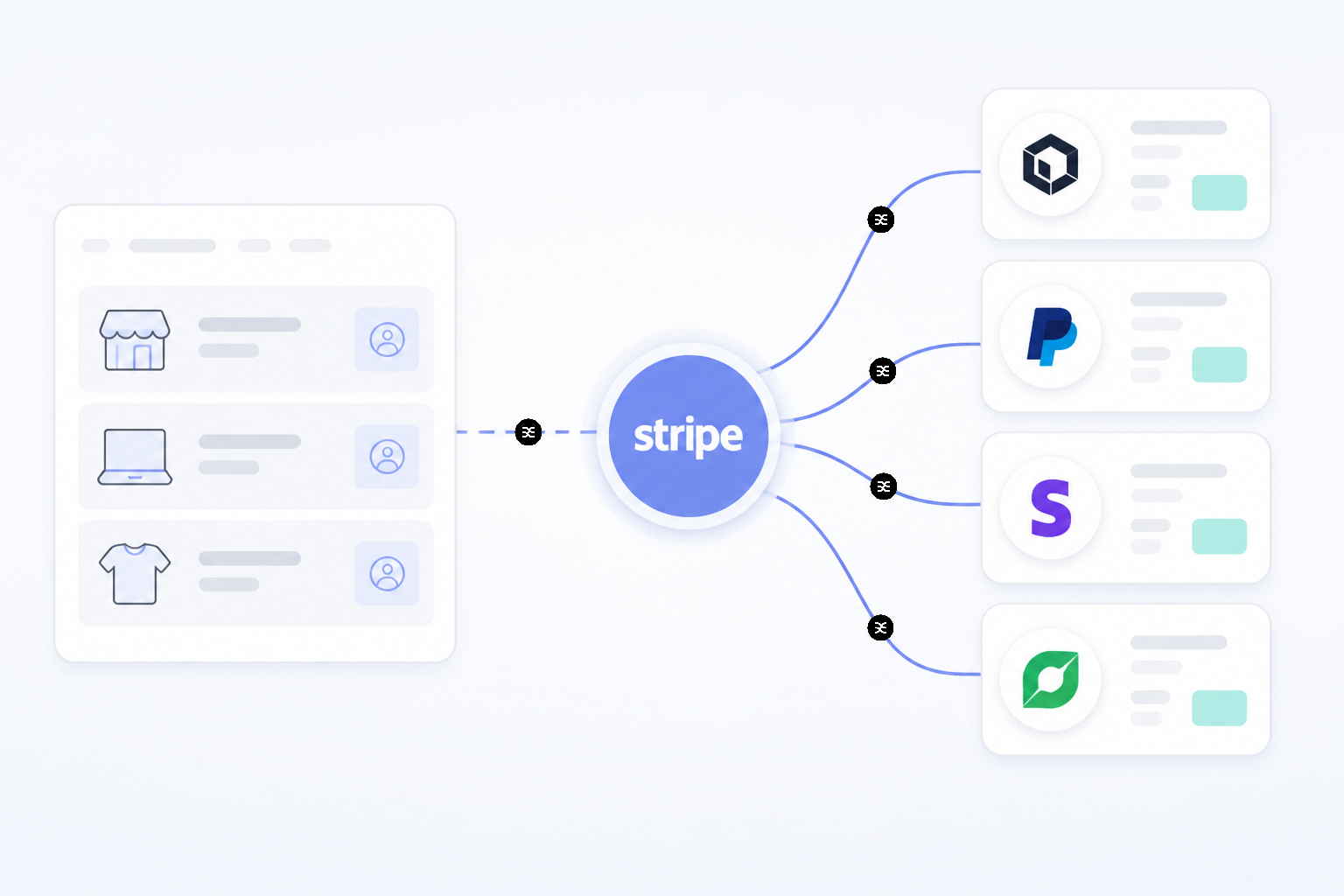 Stripe's products are excellent, but the payment processing market is vast. As platforms mature, their needs change, and issues that were minor at the start can become major obstacles to growth.
The search for Stripe Connect alternatives usually starts when a platform runs into one of three core challenges: operational risk, pricing constraints, or a need for deeper specialization.
Unexpected account holds or closures represent a significant operational risk. While not a daily occurrence for everyone, sudden freezes can halt payment flows without warning, leaving your users unpaid and your support team scrambling. For a marketplace relying on trust, this can be catastrophic.
Beyond risk, the economics can become challenging. Stripe's standard pricing is straightforward but can erode margins significantly as your payment volume climbs into the millions. Many purpose-built Stripe Connect alternatives offer pricing models, like interchange-plus or custom revenue-sharing agreements, that are designed to scale with you.
Finally, there's the need for specialization. A vertical SaaS platform for construction contractors has very different payment flow needs than an e-commerce marketplace for artists. Generic solutions can create friction, while specialized providers build workflows designed for your industry's specific challenges.
What Should You Look for in an Alternative to Stripe Connect?
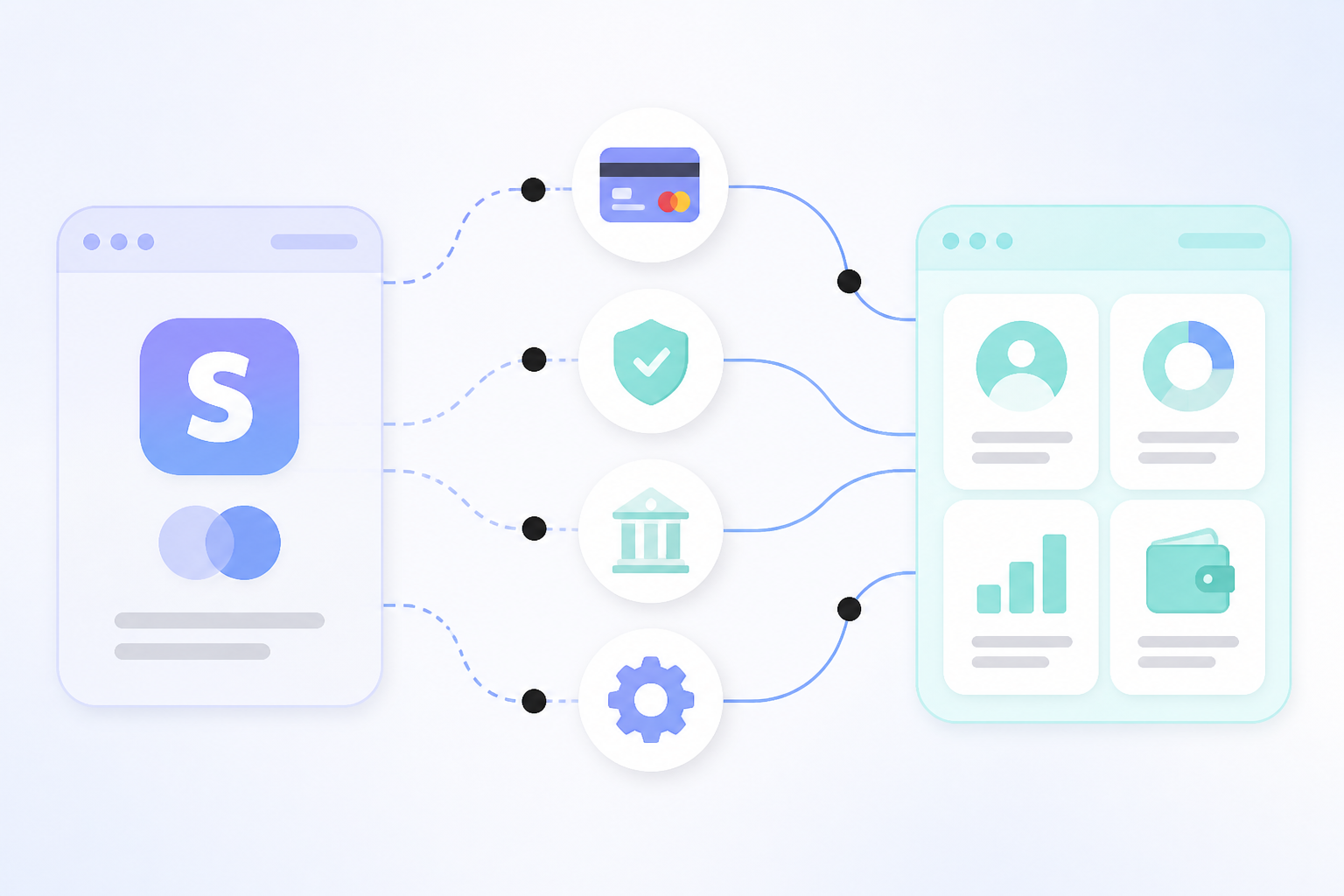 When you start comparing providers, it's easy to get lost in feature lists. Instead, focus on the core capabilities your platform needs to thrive. A true partner will help you with much more than just card acceptance.
Here are the key things to evaluate in a Stripe Connect alternative:
- Automated Split Payments: For any marketplace or platform with multiple sellers, this is non-negotiable. The system must be able to automatically and accurately divide a single customer payment among the seller, your platform, and any other parties, handling your platform fees correctly every time.
- Seamless Seller Onboarding: The first interaction your users have with your payment system sets the tone. An ideal alternative to Stripe Connect will offer a smooth, white-labeled onboarding experience that feels like a natural part of your platform, while still handling all the necessary Know Your Customer (KYC) and identity verification checks in the background.
- Robust Compliance Management: Moving money is a heavily regulated activity. Your payment partner should act as a compliance shield, managing requirements like PCI for card data security and regulations like PSD2 in Europe. This is a huge burden to lift from your team.
- Scalable and Transparent Pricing: Look for a partner whose pricing model aligns with your growth. This could be a revenue share, a flat subscription, or custom rates that decrease as your volume increases. Avoid models that penalize you for success.
- Deep Integration and Support: The best Stripe Connect alternatives are built to be embedded directly into your software. This requires clean APIs and excellent developer documentation. Just as important is the human element; look for a provider that offers dedicated support from a team that understands your business, not just a ticket-based system.
A Comparison of Top Stripe Connect Alternatives
The modern payments landscape is full of excellent providers ready to challenge the status quo. Instead of being general-purpose tools, many are purpose-built for the unique needs of software platforms and marketplaces. Here's how some of them stack up.
Purpose-Built Solutions for Modern Platforms
Newer providers are often designed as "embedded-first," meaning their entire product is built around the idea of disappearing into your platform. They aim to give you the power of a payment facilitator (PayFac) without you having to take on the years of work and immense liability that come with that registration.
For example, companies like Unipaas are built specifically for vertical SaaS companies and B2B platforms, offering workflows tailored to specific industries. Another strong contender, Ryft, focuses on automating complex split payments for marketplaces and is authorized in the UK and Europe to manage the entire payment and payout flow, simplifying compliance. Others, like Finix or Adyen for Platforms, provide infrastructure for businesses that want maximum control and are on the path to becoming a PayFac themselves.
The table below highlights some key differences in approach:
| Feature | Stripe Connect (Custom) | Ryft | Unipaas |
|---|---|---|---|
| Best For | General-purpose platforms, strong cross-border needs | Marketplaces requiring complex split payments | Vertical SaaS with specific industry workflows |
| Onboarding | Highly customizable but requires significant dev work | Automated and compliant, optimized for UK/EU | Simplified integration and white-label options |
| Key Strength | Massive ecosystem, developer tools, global reach | FCA-authorized, automated split payment logic | Embedded-first design, industry specialization |
| Pricing Model | Per-transaction + fees for add-on services | Interchange++ or custom pricing at volume | Revenue share and custom platform-centric pricing |
Choosing the right partner involves matching their strengths to your specific business model.
How Does This Fit Into Your Broader Financial Stack?
Choosing a payment processor is a critical first step, but it is still just one piece of your financial infrastructure. Getting paid is only the beginning of the journey for your money. Once customer payments clear and land in your main business account—whether from a Stripe Connect alternative or Stripe itself—the work is just beginning.
That income needs to be intelligently allocated. You have to set aside funds for taxes, cover operating expenses, pay team members, and, most importantly, take your profit. The convergence of embedded payments and financial automation becomes incredibly powerful.
Many SMB owners and freelancers still do this manually, constantly checking balances and moving money between accounts.
For instance, after your payment provider deposits a batch of successfully captured funds, a smart routing tool can take over. Tools like Sequence can then automate the next steps, using simple If/Then rules to route specific percentages or fixed amounts of that income into dedicated accounts for taxes, payroll, and profit, giving you a clear, real-time picture of your cash flow without manual transfers. This creates a resilient system where money moves to the right place automatically.
Building a Resilient Payment Infrastructure
Choosing your platform's payment engine is one of the most important decisions you'll make. For a long time, Stripe Connect was the automatic answer, and for good reason. It's a fantastic product that has enabled thousands of businesses.
But the financial toolkit available to founders is expanding. The rise of specialized Stripe Connect alternatives gives you more options than ever before. You can now find partners that are built from the ground up for your specific business model, whether you're running a global marketplace, a niche software tool, or a B2B platform.
The right choice is not just about saving a few basis points on transaction fees. It's about building a resilient, scalable financial operation that supports your growth instead of hindering it. It's about protecting your platform from operational shocks, simplifying compliance, and creating a seamless experience for the users who trust you with their business.