n8n payment automation API
By Liza Zautner ·
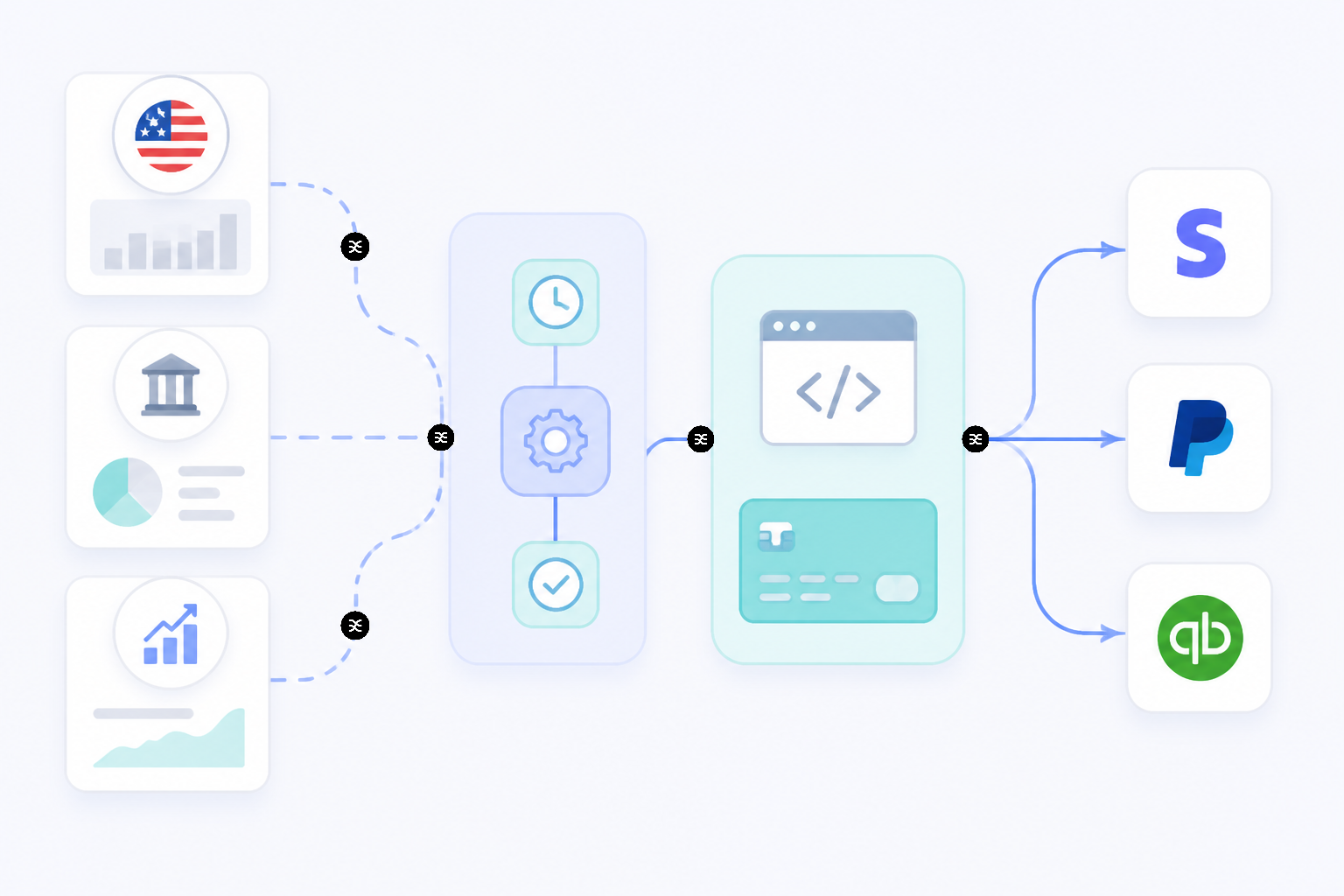
The structure of work is changing. According to the Bureau of Labor Statistics' most recent employment situation summary, millions of Americans identify as self-employed or part of the contingent workforce. For this growing group, the roles of CEO, bookkeeper, sales team, and entire finance department often fall to one individual.
Juggling client payments, business expenses, and personal savings across multiple accounts can feel like a constant, low-grade source of stress, especially when income is unpredictable. The traditional financial system, built for the steady, bi-weekly paycheck, often falls short. New automation tools let users build the financial infrastructure they need, custom-fit to their unique cash flow, though.
The 2024 Federal Reserve household survey found that 63% of adults could cover a $400 emergency expense with cash, savings, or a credit card paid at the next statement.
N8N's Role in Modern Payment Automation Workflows
At its core, n8n is a workflow automation tool that helps you connect different applications and services to perform tasks automatically. For anyone managing money, it serves as a bridge, allowing you to build your own financial logic and execute payments without needing to be a full-time developer.
Think of it as a set of digital building blocks. You can visually connect apps like your invoicing software, your CRM, and your email client to create a chain of events. When one thing happens (like a client signs a contract), it can trigger a series of actions (like automatically generating and sending the first invoice).
This process offers custom-built operational workflows.
While it has a user-friendly interface, n8n is gaining favor with a more technically-inclined audience who finds other platforms restrictive. New Signals data shows that n8n is gaining traction within the workflow automation user base, particularly among users who want more control.
, particularly among users who want more control. This is because n8n is "source-available," meaning the code can be viewed, modified, and even hosted on personal servers for greater security and lower costs at scale.
For freelancers and small business owners, this level of control is significant. It means you can build a system that manages your money exactly how you want it to, reacting instantly to incoming payments or project milestones. It's about designing a process that fits your business, not forcing your business to fit a rigid software's process.
Beyond Simple Integrations: Sophisticated Payment Automations with N8N
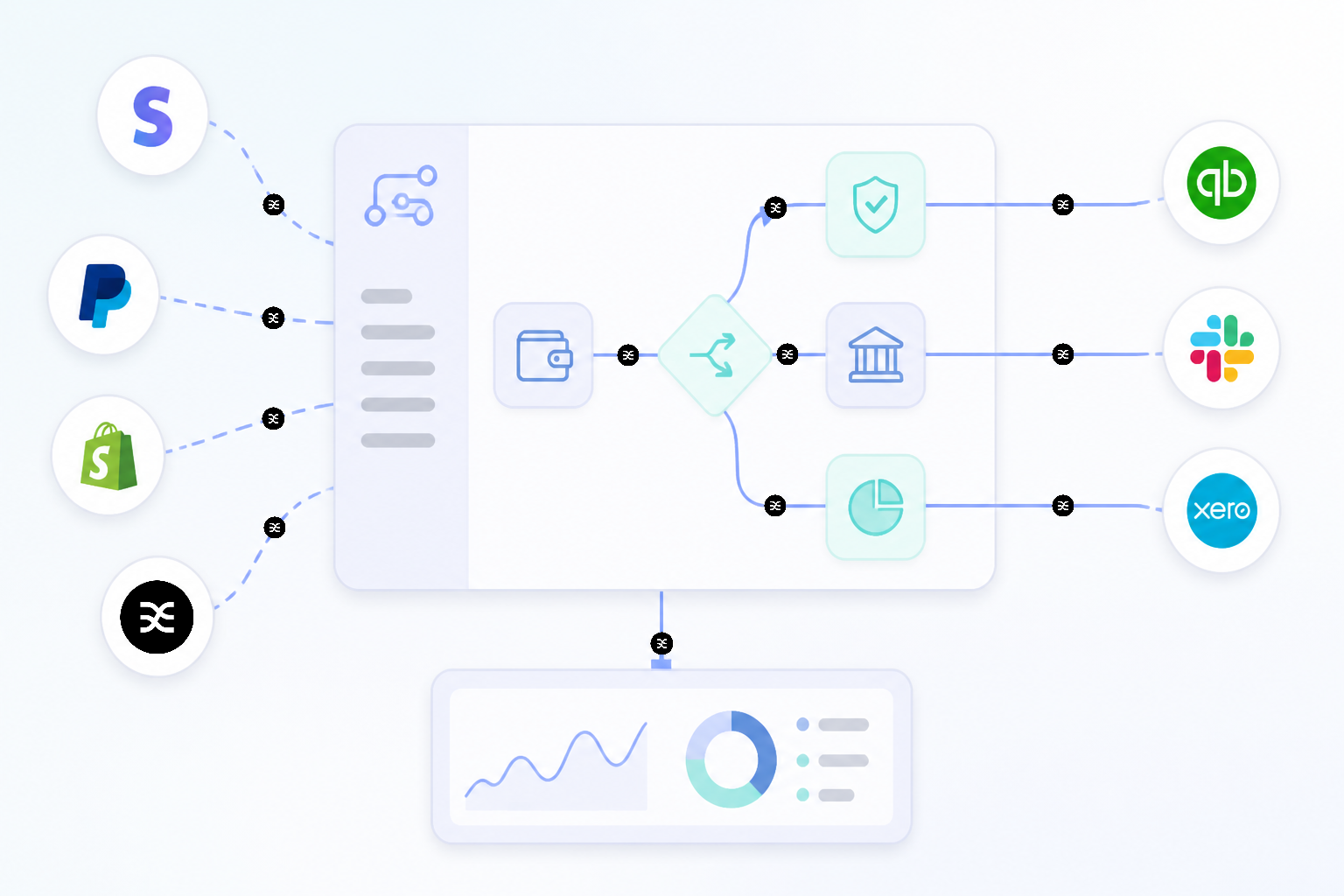 N8n excels at creating sophisticated, multi-step financial automations that go far beyond simple triggers. It enables you to build workflows with conditional logic, branching paths, and data manipulation, which is essential for handling the complexities of real-world financial operations.
" That's useful, but it doesn't solve the deeper administrative burden. A sophisticated n8n workflow could look more like this:
Trigger: A new payment is confirmed in Stripe.
Data Enrichment: The workflow pulls the customer's details from your CRM. 3.
Action 1: It marks the corresponding invoice as "Paid" in your accounting software. 4. Conditional Logic: It checks the payment amount.
If it's a final project payment, it triggers a "project offboarding" sequence. If it's a new subscription, it triggers a "welcome" sequence. 5.
Action 2: It sends a personalized thank-you email to the client.
This ability to build complex, branching logic is what makes n8n a serious tool for financial management. Research analyzing thousands of public n8n workflows found that a huge number of them involve custom logic and connections to external APIs, showing that users are building genuinely custom solutions. The fact that so many workflows connect to external services demonstrates a clear trend: people are using n8n to build systems that automate core business functions, not just minor tasks.
According to an analysis of over 6,000 workflows, the most popular node by a wide margin is the one that lets users connect to any API, a key feature explored later.
The Power of N8N's HTTP Request Node
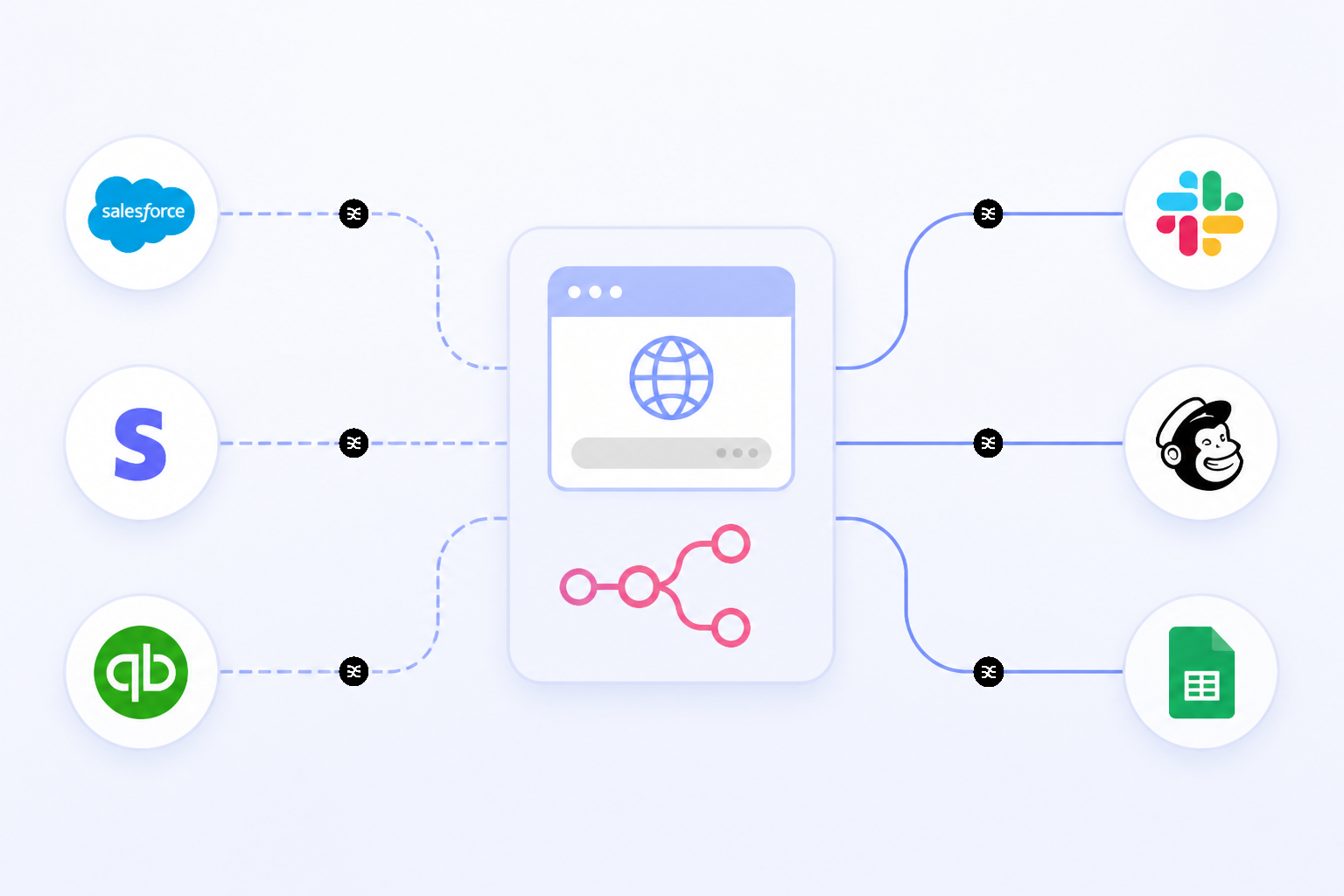 The HTTP Request node is arguably n8n's most important feature, acting as a universal connector to virtually any service on the internet that has an API. It's the tool that allows you to move beyond pre-built integrations and connect to any payment gateway, bank API, or financial service you need, making your n8n payment automation API possibilities nearly limitless.
What is an API? Think of it as a restaurant menu for a web service. " The HTTP Request node is how your n8n workflow "orders" from that menu.
While n8n offers hundreds of pre-built integrations (nodes), you will inevitably run into a niche financial service or a specific bank API that doesn't have its own dedicated node.
This is where the HTTP Request node shines. Instead of waiting for someone to build the integration, you can build it yourself in a matter of minutes just by reading the service's API documentation.
This is how users connect to a vast ecosystem of financial tools. As one developer noted in a discussion about essential APIs, the PayPal API has been rock solid for automating invoice generation and payment tracking, a connection made possible through direct API calls.
This single feature is what allows for building a workflow to automate tax set-aside solopreneur API functions by connecting directly to a payment service that can move money between accounts. It turns n8n from a simple connector of popular apps into a true orchestration platform for an entire financial stack.
N8N's Growth, AI, and Mid-Market Adoption
N8n is experiencing rapid growth, particularly among mid-market companies and teams incorporating AI into their processes. The platform's recent funding and valuation milestones signal that businesses are increasingly trusting it with mission-critical systems, including complex payment and financial workflows.
The numbers are compelling. 5 billion. It has also grown to serve over 3,000 enterprise customers, with more than 75% of them now using its AI workflow capabilities.
This sharp turn towards AI-powered workflows is significant. Companies are now building intelligent systems that can make decisions, analyze data, and interact with other services in more dynamic ways.
For a freelancer or small business owner, this trend is empowering. You can now build workflows that use AI to categorize expenses, draft client communications based on payment status, or even forecast cash flow from incoming project data. The same technology that larger companies are deploying is accessible to you through n8n's visual interface.
This adoption by larger, mid-market companies serves as a strong vote of confidence. When a business trusts a platform to handle core operations and customer-facing processes, it indicates a high level of reliability and security. For anyone looking to embed payment API in client automation workflow tools, knowing that n8n is trusted with complex systems at scale provides crucial peace of mind.
N8N vs. Zapier: The Competitive Landscape?
While Zapier is known for its ease of use and massive library of integrations, n8n appeals to users who need more customization, control over their data, and cost-effective scaling. The choice often comes down to a trade-off between simplicity and flexibility.
Zapier has long been the go-to for simple, linear automations. Its straightforward, user-friendly interface makes it incredibly easy to connect two apps and get a workflow running in minutes. However, as your needs become more complex, you may start to hit its limitations in terms of multi-step logic, data handling, and cost.
This is where n8n has carved out its space. It offers a more visual, flowchart-style canvas that makes it easier to design and understand complex, branching workflows. Its "source-available" model also presents a significant advantage for many.
Here is a simple breakdown of their core differences:
| Feature | Zapier | n8n |
|---|---|---|
| Hosting | Cloud-based only | Cloud-based or self-hosted |
| Logic | Primarily linear "Zaps" | Complex, branching workflows |
| Pricing Model | Based on tasks and update time | Based on executions, with a generous free tier and affordable self-hosting |
| Best For | Quick, simple integrations | Custom, scalable, and complex automations |
N8n's deep integration with payment platforms is a key differentiator. For example, its native Stripe integration allows for dozens of triggers and actions, from handling new subscriptions and failed payments to managing customers and processing refunds. While Zapier also integrates with Stripe, n8n's flexible structure lets you build more sophisticated logic around these events, creating a truly customized payment processing engine.
Practical N8N Automations for Financial Operations
You can use n8n to build practical, automated workflows that handle everything from invoicing and subscription management to tax savings and financial reporting. These systems save you time, reduce manual errors, and give you a real-time view of your financial health.
Let's move from theory to practice. What could you actually build?
Automated Invoicing and Collections
When you move a project card to "Completed" in Trello or Asana, n8n springs into action:
- It automatically generates a detailed invoice in Stripe, PayPal, or Invoiced.
- It sends the invoice to the client via email, using a pre-written template.
- It creates a follow-up reminder. If the invoice isn't paid within 14 days, it sends a polite nudge.
- Once the payment is detected, it updates the Trello card, marks the invoice as paid, and sends a thank-you note.
This single workflow eliminates hours of administrative work and ensures you get paid faster, all while maintaining professional communication with your clients. It's a perfect example of a system that works for you, freeing you up to focus on what you do best. Building this kind of structured system is reminiscent of established financial methodologies, and you can see a practical example of how automation supports financial discipline in this related guide.
What the Federal Reserve's Household Economics Report Reveals
The Federal Reserve's recent report on the economic well-being of U.S. households highlights significant income volatility, especially for the self-employed. This financial uncertainty underscores the critical need for automated systems that can help individuals and small businesses manage unpredictable cash flow.
According to the 2024 Survey of Household Economics and Decisionmaking, a large portion of households with gig or self-employment income experience month-to-month income swings. This volatility makes traditional budgeting nearly impossible and creates constant anxiety about covering bills, savings, and taxes.
This is a structural problem. The modern economy produces lumpy income, but our financial obligations remain fixed. An automation platform with a robust n8n payment automation API can serve as a personal cash flow manager.
Imagine a workflow that monitors your primary checking account. When a large client payment lands, the workflow automatically triggers. It calculates your tax obligation (say, 25%) and instantly moves that amount to a separate savings account.
It then allocates another 10% to a business reinvestment fuWhat's left in the operating account is available to run the business with. line provides stability in the face of financial uncertainty.
What the Bureau of Labor Statistics' Employment Situation Reveals
Data from the Bureau of Labor Statistics shows a persistent and growing trend of independent work, freelancing, and small business creation. This shift means more people are solely responsible for their own financial administration, increasing the demand for accessible and adaptable financial management tools.
Every month, the Bureau of Labor Statistics releases data on the American workforce. While headlines often focus on the headline unemployment number, the details reveal a changing landscape of work.
The number of unincorporated self-employed workers and independent contractors remains a significant part of the economy. For millions, this is their primary source of income rather than just side hustles.
t serving clients, not creating, and not growing the business.
This is precisely the problem that a programmable n8n payment automation API is designed to solve. " By automating tasks like invoice tracking, expense categorization, and savings allocation, they can reclaim hours of their week and gain the same kind of financial clarity that larger organizations have, leveling the playing field.
What the U.S. Small Business Administration's Guide to Finance Reveals
The U.S. Small Business Administration offers clear guidance on financial best practices, including separating business and personal funds and maintaining adequate cash reserves. A proactive automation strategy using n8n can turn this excellent advice into an automated, foolproof system.
On its website, the SBA advises small business owners to take specific steps to manage their finances effectively. Key recommendations include opening a separate business bank account, monitoring cash flow closely, and setting aside funds for future expenses and taxes. This is sound, timeless advice.
The challenge has always been the daIt's easy for things to slide. A busy week can lead to forgetting to move money into a tax account. on hand than you really do, because it's co-mingled with customer deposits and tax savings.
Automation makes following this advice effortless. You can embed payment API in client automation workflow tools and your own internal systems to enforce these rules automatically. For instance, an n8n workflow could be set up to:
Monitor your business operating account.
Whenever the balance exceeds a certain threshold (your "safe to spend" amount), the surplus is automatically swept into different "virtual" accounts for profit, taxes, and owner's pay.
This ensures you are always operating on the correct cash reserves and never accidentally spend your tax money.
What the IRS Guide for Small Businesses Reveals
The IRS places a heavy emphasis on record-keeping and estimated tax payments for the self-employed, two areas that are notoriously difficult to manage manually. Using n8n to create a dedicated automate tax set-aside solopreneur API workflow can drastically reduce tax-season stress and the risk of penalties.
For any freelancer or small business owner, the IRS website for the self-employed is a source of both guidance and anxiety. The rules are clear: you are required to pay income tax as you earn it throughout the year via estimated tax payments.
Failing to do so can result in underpayment penalties. The problem is that this requires you to constantly know what you've earned and what you owe.
This is an ideal use case for payment automation. An n8n workflow can connect directly to your payment processor, like Stripe. Every time you receive a payment, the workflow can trigger an API call to a payment service to perform a series of transfers.
For example, on a $1,000 client payment:
- succeeded webhook from Stripe. 2.
Action: n8n receives the webhook data. 3. Calculation: It calculates 30% for taxes ($300).
- API Call: It instructs a payment routing service to transfer $300 from your main operating aThis system helps ensure that tax funds are consistently segregated and accounted for in real-time. When it comes time to make quarterly estimated payments, the funds will be readily available.make your quarterly estimated payment, the money is already there, waiting.
What the Consumer Financial Protection Bureau's Resources Reveal
The Consumer Financial Protection Bureau provides tools and information to help people navigate a complex financial system. The principles of transparency and control that the CFPB champions can be personally implemented through automation, giving individuals a way to enforce their own financial rules.
The mission of the CFPB is to arm consumers with the information and tools they need to make smart financial decisions. The agency was founded on the idea that the financial world can be confusing and that consumers need clear rules and protections. While the CFPB works at the systemic level, automation allows individuals to apply these same principles to their own finances.
You can use n8n to build your own "consumer protection" rules. For example, you can build a workflow that monitors your bank accounts and moves money to prevent an overdraft before it happens. Or you could create a system that consolidates small balances from various apps into your maThis changes the dynamic.
Rather than being a passive user of financial products designed by large institutions, individuals can become active architects of their own financial system. They can set the rules for how their money moves, working to ensure financial life operates in their best interest. ggling multiple income streams, who can use a programmable n8n payment automation API to bring order to the chaos.
What McKinsey's Financial Services Insights Reveal
High-level analysis from firms like McKinsey points to a future of "embedded finance," where financial services are integrated directly into other software and experiences. N8n and similar tools democratize this trend, allowing anyone to become a builder and sell automation workflows with payment execution or create their own embedded financial solutions.
Consulting firms like McKinsey frequently write about the financial services industry's future, and a recurring theme is the rise of embedded finance. This means getting a loan from your e-commerce platform or insurance from your car-sharing app. The bank is still there, but its services are delivered through another company's product via an API.
This is powerful, but it's often driven by large tech companies. What's exciting is that tools like n8n allow individuals and small businesses to harness this same concept for themselves. You can embed payment logic directly into your project management tool, your customer support desk, or your personal finance dashboard.
For instance, you could build a custom financial dashboard that pulls data from all your bank accounts and payment processors. Then, using a smart financial router, you can create rules within your dashboard that automatically move money between accounts to hit specific savings targets or pay down debt. Smart financial routers allow you to define IF/THEN rules on a visual "Money Map" to orchestrate transfers between your different accounts, acting as the execution engine for the logic you design in a tool like n8n.
This is you, as an individual or a small business, building your own embedded finance experience.
What Building an SEO Automation in n8n Reveals
Watching someone build a non-financial workflow, like for SEO research, reveals the core logic and accessibility of tools like n8n. The same process of connecting to an API, fetching data, and processing it can be directly applied to building a sophisticated n8n payment automation API workflow.
There are countless tutorials online showing people building automations with n8n. One popular example is a YouTube video explaining how to build an SEO keyword research workflow.
In it, the creator connects to a marketing data API, pulls keyword volumes, processes the data, and sends it to a Google Sheet. While the subject is marketing, not money, the process is identical to building a financial automation.
The steps are the same:
- Authenticate: Connect to a service's API with a key. 2.
, keyword data or payment transaction data). 3. Process: Manipulate or filter the data within n8n.
- Act: Send the processed data to another service (e.g., a spreadsheet or a payment API).
This demonstrates that the skill of automation is transferable. If you can understand the logic of connecting tools to streamline one part of your business, you can apply that same thinking to your finances. This opens up new possibilities, including the ability to sell automation workflows with payment execution.
A consultant could build a custom workflow for a client and use n8n's payment nodes to manage the subscription or billing for that service, creating a completely automated business. The financial system is complex and can be challenging for the modern freelancer or small business owner with variable income and diverse money flows. The days of being a passive recipient of financial services are evolving.
But the rise of accessible, flexible automation platforms puts a new kind of control back in your hands.
Tools like n8n are more than just productivity boosters. They are platforms for building personalized financial infrastructure. By connecting the various apps and services you already use, you can design a system that automatically enforces your financial strategy, saving for taxes, paying down debt, investing for the future, and ensuring your business is running on real numbers.
ving you the clarity and peace of mind to focus on your life and your work.