API Integration Strategy: Explained Simply
By Gilad Uziely ·
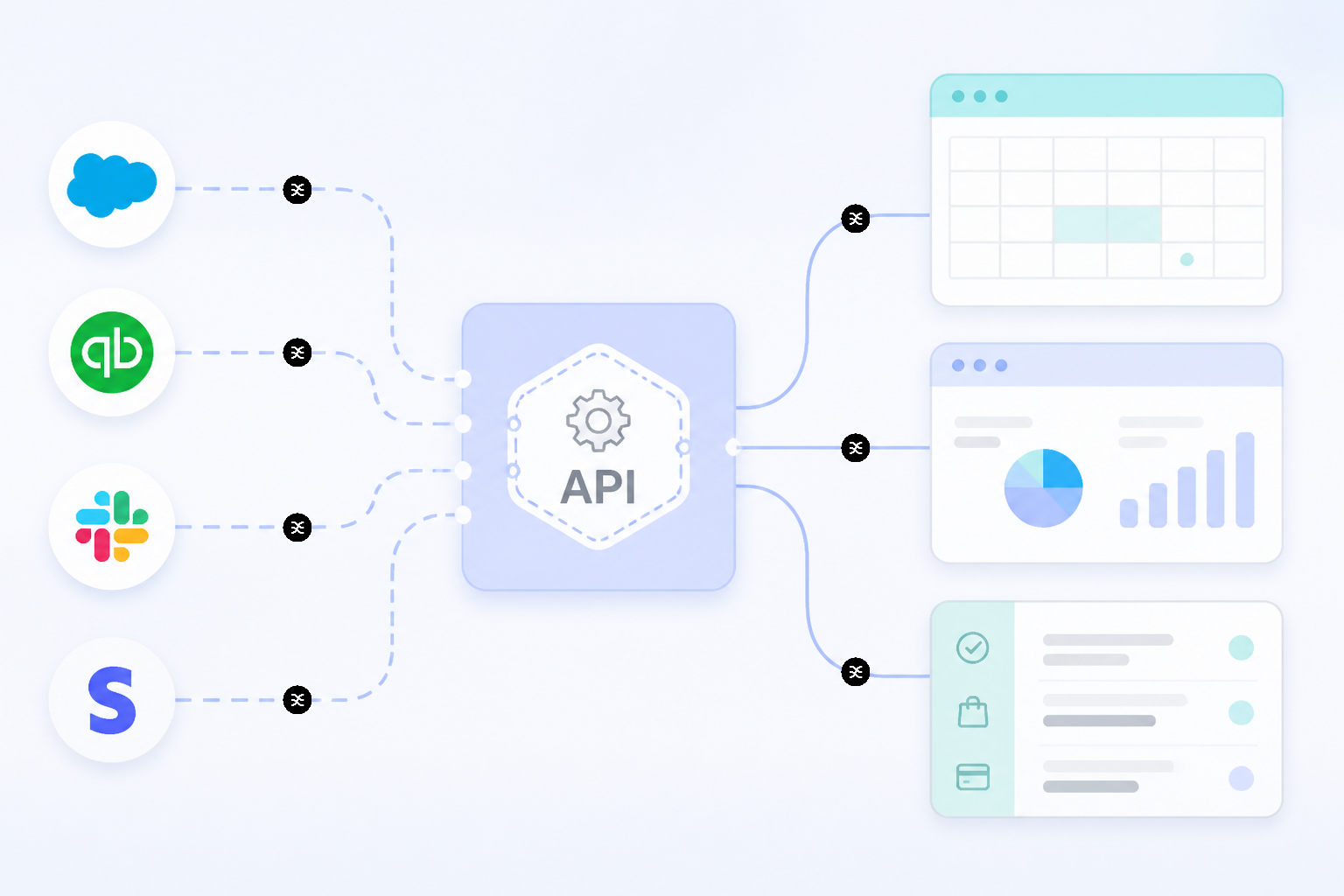
API integration is the invisible engine of the digital world, the process that lets two different software applications talk to each other. When you pay for a coffee with your phone, check the weather on your calendar app, or see your business bank balance inside your accounting software, you're using an API. But if you're a business owner or a freelancer, you've probably felt the friction when these connections don't work as they should.
Understanding API integration explained here can help.
The reason your current setup might be failing is that the entire landscape of API integration is undergoing a massive shift.
", Bru Woodring
The 2024 Federal Reserve household survey found that 63% of adults could cover a $400 emergency expense with cash, savings, or a credit card paid at the next statement.
Do AI agents drive API demand growth?
The bots are here, and they're talking to everything. A significant driver of this change is that AI agents are rapidly becoming a primary consumer of APIs, creating a new kind of demand that older systems weren't built for. Instead of a person clicking a button, automated AI tools are now making requests, pulling data, and triggering actions between applications millions of times a day.
For years, API integration was designed around human-driven actions. A person logged into a system, performed a task, and an API call was made. But today's environment is different.
We have AI-powered chatbots that need to check inventory systems, machine learning models that analyze market data from multiple sources in real time, and automated workflows that connect various department software without any human intervention. This shift from human-to-machine to machine-to-machine communication is relentless and resource-intensive.
This new demand is fundamentally changing how integrations need to be built. Built with large language models, not traditional human-facing applications. These AI agents require APIs that are not just available but are also fast, reliable, and capable of handling a constant stream of requests.
For anyone seeking API integration explained, this is a key trend to watch.
Think about a simple e-commerce business. In the past, an API integration might connect your storefront to your shipping provider, triggered only when a customer places an order. Now, an AI-powered inventory management system might be constantly pinging your supplier's API for stock levels, your marketing platform's API to adjust ad spend based on sales velocity, and your customer service bot's API to provide real-time order status.
This constant communication creates a level of demand that is straining older integration models, fueling a massive expansion in the underlying market.
How is the global data integration market expanding?
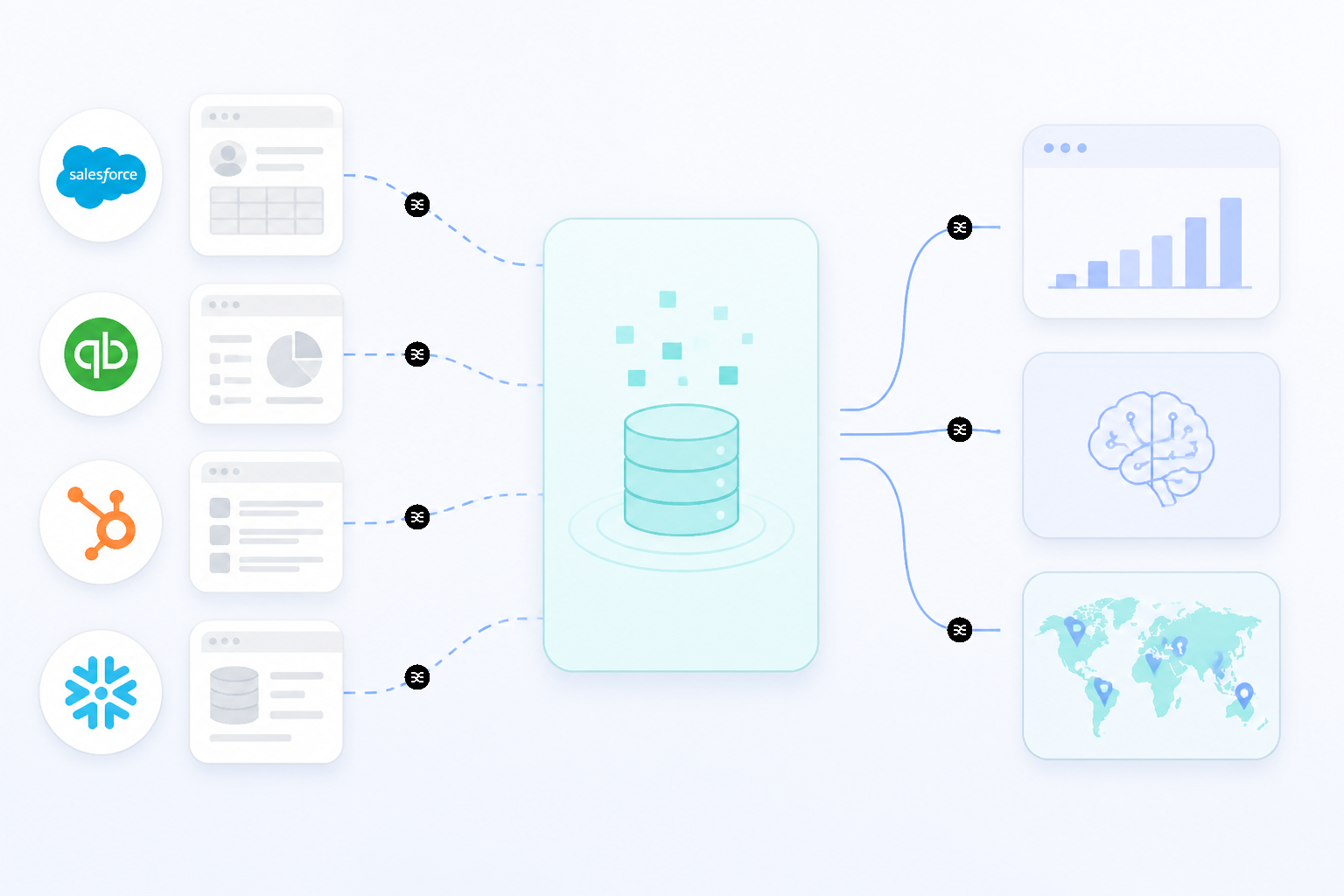 The surge in demand from AI is a key reason the global market for data integration is growing at an explosive rate. Businesses everywhere are realizing that their ability to compete depends on how well they can connect their disparate data sources. This isn't just a niche tech trend; it's a foundational economic shift.
When your applications can't talk to each other, your business runs on manual work and guesswork. You copy-paste data from your payment processor to your accounting ledger. You check three different bank accounts to understand your cash position.
This information gap isn't just annoying; it's expensive. It leads to errors, wasted time, and missed opportunities. The solution is effective data integration, and companies are investing heavily to make it a reality.
The numbers paint a clear picture of this investment. This isn't just about big corporations buying enterprise software.
It reflects a broader movement across businesses of all sizes to automate processes, gain clearer insights, and build more efficient operations. For freelancers and small business owners, this move toward a more connected world is both an opportunity and a challenge.
The opportunity lies in using new tools to automate the financial busywork that eats into your productive hours. The challenge is that as more services are built on this interconnected web, a single weak link in your financial stack can cause major problems. A faulty bank connection or an outdated payment processor API can bring your operations to a halt.
This underscores the importance of choosing partners who are building on modern infrastructure, as outlined in guides to the new API for fintech: moving real money. This trend isn't confined to established tech hubs; it's a global phenomenon.
Is SaaS API adoption surging in emerging markets?
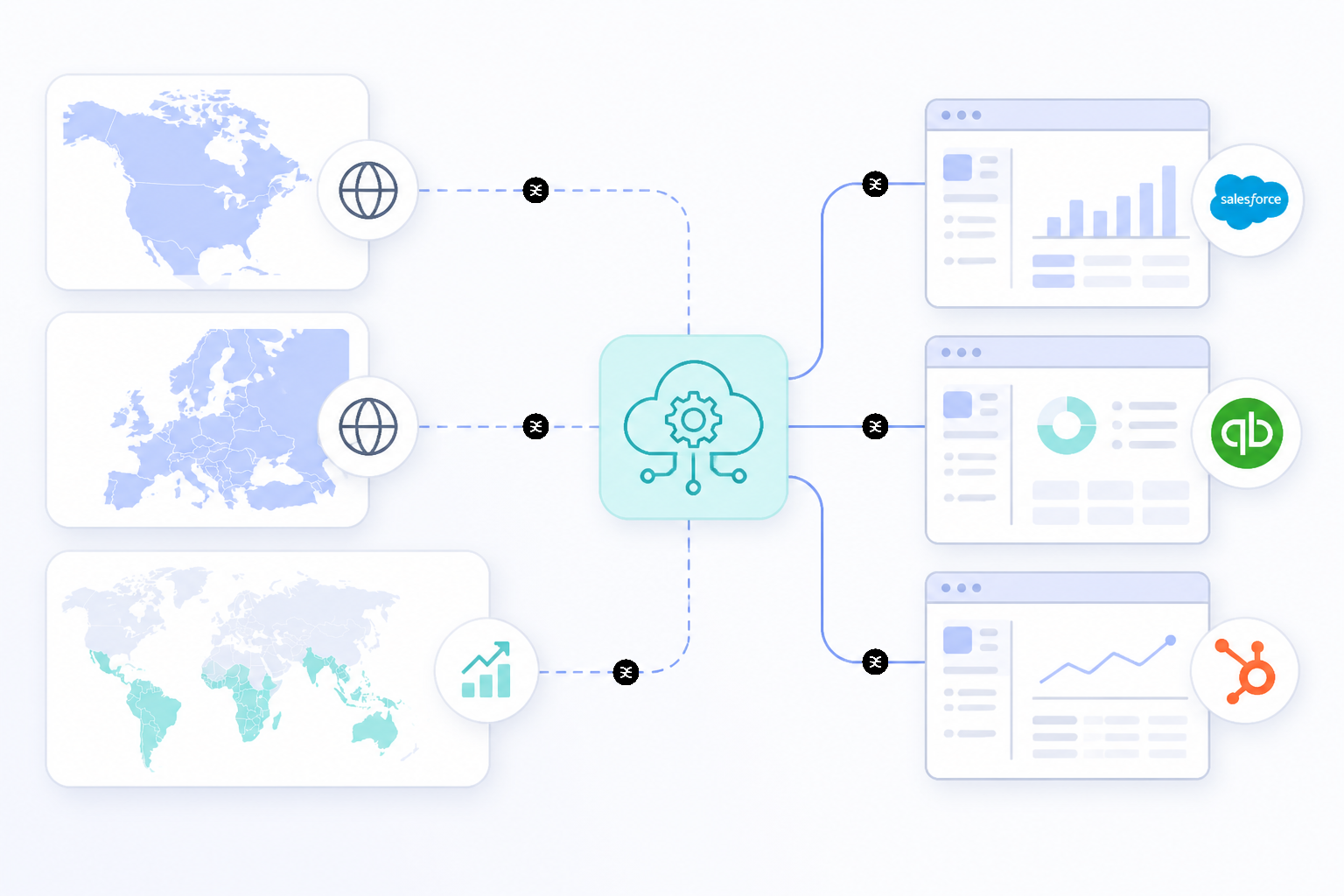 This push for better integration isn't just happening in North America and Europe; it's a worldwide movement. In fact, some of the most rapid adoption of Software-as-a-Service (SaaS) and API-first business models is occurring in emerging markets. This growth is often spurred by government initiatives and a desire to leapfrog older technologies.
Digital transformation is a global priority. In regions looking to boost their economic competitiveness, investing in cloud infrastructure and encouraging SaaS adoption is a key strategy. This creates a fertile ground for API integration to flourish, as businesses look to connect their new cloud-based tools for accounting, customer relationship management (CRM), and operations.
These tools are only as powerful as their ability to work together, making API integration a critical piece of the puzzle.
Are helping to underpin a major digital push. Local businesses are adopting sophisticated SaaS solutions, and with that comes the need to integrate them. Supported by government programs that encourage digital innovation, providing a consistent example of API integration explained in practice.
This global surge is creating a more standardized, interconnected business environment. It means a freelancer in Vietnam (more on that later) can use the same category of tools as a small business in Ohio. However, it also means that the digital plumbing connecting all these services is becoming more complex and more critical.
As businesses become more reliant on this web of APIs, the security of those connections becomes a paramount concern.
Critical Security Challenges in API Integration
As our reliance on connected applications grows, so do the risks. The very APIs that enable convenience and automation also create potential entry points for bad actors if not properly secured. The most common failure point isn't a sophisticated hack; it's often a simple, preventable mistake in how access is managed.
When you connect two apps, you are essentially giving one permission to access data or perform actions in the other. If that permission is too broad or isn't properly authenticated, it can open the door to serious problems. This is the central challenge of API security: enabling communication without exposing sensitive information.
For anyone moving money, from a small business owner paying suppliers to a freelancer managing client invoices, the stakes are incredibly high.
Security researchers find that the biggest issues are often the most basic. Improper authentication, authorization, or access control is the most prevalent concern, cited in 30% of API security incidents.
This refers to vulnerabilities that might allow an unauthorized user to access data or execute functions they shouldn't be able to. Other major concerns include insecure data leaks (17%) and business logic flaws (16%) that can be exploited.
The Problem with "Set It and Forget It"
A common mistake is treating API integration as a one-time setup. A business might connect its payment gateway to its accounting software using an API key and then never think about it again. But software changes, new vulnerabilities are discovered, and what was secure yesterday might not be secure today.
This is why modern API integration requires active management and monitoring. Key security practices include:
Strong Authentication: Ensuring that every API request is coming from a legitimate, verified source.
Least Privilege Principle: Granting each application only the minimum level of access it needs to perform its function, and nothing more.
Rate Limiting: Preventing abuse by limiting the number of requests an application can make in a certain period.
Continuous Monitoring: Actively watching for unusual activity or patterns that could signal a security breach.
These security measures are no longer optional. They are fundamental to building a trustworthy ecosystem where businesses can confidently connect their tools and data.
Ecosystem-Driven Innovation and API Partnerships
The solution to this complexity isn't to unplug everything; it's to build smarter connections. Forward-thinking companies are no longer just building products in isolation. Instead, they are building open platforms and using APIs to create ecosystems where different services can work together, leading to a new wave of innovation.
Think of your smartphone. Its power doesn't just come from the pre-installed apps; it comes from the millions of apps in the app store that can access the phone's camera, GPS, and other functions via APIs. This creates a vibrant ecosystem where developers can build new and interesting tools without having to build a new phone from scratch.
The same principle is now transforming business software and finance. API integration explained means working collaboratively.
A payment processor might offer an API that allows accounting software to automatically import transaction data. A bank might offer an API that allows a financial planning tool to analyze a user's spending habits. This ecosystem-driven approach means you can assemble a custom-built financial stack from best-in-class providers instead of being locked into a single, monolithic system that does everything poorly.
It lets you connect your existing bank accounts, credit cards, and payment platforms into a unified system that works for you.
This collaborative model is expanding rapidly. You can now use an embedded finance API for your business to offer financial products directly to your customers, such as point-of-sale financing or branded debit cards, without having to become a bank yourself.
These partnership opportunities are creating new revenue streams and deeper customer relationships, all powered by secure, reliable API integration. This is particularly visible in the world of payments.
Digital Payment Adoption and Business Integration
Nowhere is this shift toward an integrated ecosystem more apparent than in digital payments. The global move away from physical cash and checks toward digital transactions has accelerated dramatically, creating a huge demand for API integrations that can move money smoothly and securely. This reflects a broader shift toward more digitally mature business environments.
For years, business payments were clunky. You wrote paper checks, waited for them to clear, and manually reconciled your bank statements. Even early digital methods like wire transfers or standard ACH were often slow and disconnected from other business systems.
Today, the expectation is for payments to be instant, automated, and deeply integrated into the software you use to run your business.
This is part of a massive global trend. According to research from McKinsey, the financial services industry is continuing its digital march, with integrated experiences becoming the standard.
Consumers and businesses alike now expect to be able to pay, get paid, and move money within the apps they use every day. Whether it's a freelancer getting paid via a project management tool or a small business paying a supplier directly from their accounting software, the underlying mechanism is an API integration.
This creates immense benefits in terms of efficiency and cash flow visibility. When your payment system is connected to your invoicing software, you can automate reminders for late payments. When it's connected to your bookkeeping app, your records are always up to date.
However, it also highlights the need for a robust integration layer that can handle the complexities of moving real money, including compliance, security, and error handling. This reality is shaping the financial lives of households across the country.
What Federal Reserve — Economic Well-Being of U.S. Households reveals
The need for better financial tools isn't just a business concern; it's a household reality. The Federal Reserve's own data shows that many Americans, especially those with self-employment income, deal with significant financial volatility. This makes managing cash flow a constant challenge, and it's a problem that smarter API integration is uniquely positioned to solve.
If you're a freelancer, gig worker, or small business owner, you know that your income isn't a predictable, steady paycheck. Some months are great; others are lean.
The Federal Reserve's 2023 Survey of Household Economics and Decisionmaking highlights this reality, finding that many households would struggle to cover an unexpected $400 expense. For those with variable income, this financial precarity is a persistent stress.
This is where the promise of a connected financial ecosystem becomes personal. Imagine if your bank accounts could intelligently respond to your fluctuating income. When a large client payment comes in, an automated rule could instantly move a percentage to a tax savings account, another portion to a business expense fund, and the rest to your personal checking.
This isn't a fantasy; it's what modern API integration enables.
By connecting your bank accounts, payment platforms, and other financial services, you can build a system that helps smooth out the peaks and valleys. This allows you to follow sound financial principles, like setting aside money for taxes and building a cash reserve, without requiring constant manual effort. It turns your bank accounts from passive containers of money into active participants in your financial health, a crucial advantage in a changing labor market.
What Bureau of Labor Statistics — Employment Situation reveals
The modern economy is increasingly powered by small businesses and independent workers, a trend confirmed by labor market data. These entrepreneurs don't have a corporate finance department to manage their money; they are the finance department. This growing segment of the workforce has a distinct and urgent need for the kind of flexible, automated financial infrastructure that good API integration provides.
S. economy, with millions of people employed by small businesses or working for themselves.
This includes everyone from freelance consultants and creative professionals to contractors and e-commerce shop owners. While their work is diverse, they share a common set of financial challenges.
They juggle multiple income streams, manage business expenses separately from personal ones, and are solely responsible for their own tax planning and retirement savings. The traditional banking model, built for a world of single-employer paychecks, often fails to meet their needs. A simple checking account offers no help in partitioning funds for taxes, operating expenses, and owner's pay.
This is why a new generation of financial tools is emerging. These tools use APIs to connect to a user's various accounts and services, providing a unified view and enabling automated money management. This allows a business owner to implement established financial strategies without needing to be a spreadsheet expert.
The growth of this independent workforce is a primary driver for innovation in financial technology, pushing it beyond simple budgeting apps and toward true workflow automation.
What U.S. Small Business Administration — Manage Your Finances reveals
Official guidance for small businesses has long emphasized the importance of disciplined financial management. The challenge has always been putting that advice into practice consistently. Modern API integration is finally closing the gap between what business owners know they should do and what they actually have time to do.
S. Small Business Administration (SBA) offers clear advice for entrepreneurs on how to manage your business finances. Core recommendations include separating business and personal finances, maintaining a cash flow forecast, and setting aside reserves.
For a busy owner wearing multiple hats, manually executing these tasks every day or week is a significant burden. An unexpected expense or a busy period can easily derail the entire system.
This is where automation powered by API integration changes the game. Instead of manually moving money between accounts for taxes, profit, and expenses, you can set up rules that do it for you automatically. When an invoice payment lands in your operating account, the system can instantly route the correct percentages to designated savings "pods" or separate bank accounts.
This ensures that financial discipline is maintained on autopilot.
Making Financial Strategy Automatic
For example, a smart financial router can connect all of your bank accounts into a single dashboard. Tools like Sequence allow you to create a visual Money Map of your finances and then build simple IF/THEN rules to move money between accounts automatically. You could set a rule like: "IF my main business checking account balance is over $10,000 at the end of the day, transfer 30% of the excess to my Tax Savings account." This is the SBA's advice, made practical and automatic through modern technology. This level of automation is also critical for navigating the complexities of tax compliance.
What IRS — Small Businesses & Self-Employed reveals
For any freelancer or small business owner, tax compliance is one of the most significant and stressful financial obligations. The rules can be complex, and the penalties for getting it wrong can be severe. API integration offers a powerful way to simplify and automate tax planning, reducing both stress and the risk of error.
The IRS provides extensive resources for the Small Businesses & Self-Employed sector, covering topics like estimated taxes, recordkeeping, and deductible expenses. A key challenge for entrepreneurs is that taxes aren't automatically withheld from their income, as they are for traditional employees. This means they are responsible for calculating and paying their own taxes, usually on a quarterly basis.
This process is notoriously difficult to manage manually. It requires you to consistently set aside a portion of every single payment you receive. It's easy to lose track, and the balance in your checking account can be deceptive, as it includes money you will eventually owe to the government.
Failure to pay enough in estimated taxes can result in underpayment penalties.
Automated financial systems driven by API integration can solve this problem elegantly. By connecting your invoicing platform and your bank accounts, an automated system can identify all business income as it arrives. , 25% or 30%) of every deposit into a dedicated account for taxes.
When it's time to make your quarterly payment, the money is already set aside and waiting. This simple automation transforms tax compliance from a quarterly scramble into a manageable, continuous process.
What Consumer Financial Protection Bureau — Consumer Tools reveals
As financial services become more interconnected, the role of consumer protection becomes even more crucial. It's essential that the APIs connecting our financial lives are built with security, transparency, and consumer rights at their core. Regulatory bodies are focused on ensuring that this new, integrated ecosystem is safe for everyone.
The Consumer Financial Protection Bureau (CFPB) offers a variety of consumer tools and resources designed to help people navigate the financial system safely. This includes guidance on bank accounts, money transfers, and protecting yourself from fraud. As more consumers and businesses use third-party apps that connect to their bank accounts, the CFPB has taken a keen interest in the safety and soundness of the data-sharing practices that make this possible.
A well-designed API integration respects consumer consent and data privacy. When you grant an app access to your financial data, it should be clear what data you are sharing, with whom you are sharing it, and for what purpose. You should also have the ability to easily revoke that access at any time.
Secure API protocols are essential for preventing unauthorized access and ensuring that your sensitive financial information remains protected.
This focus on security and transparency is a hallmark of high-quality financial technology. Reputable companies invest heavily in building secure integrations that use modern standards like OAuth, which allows for delegated access without you having to share your bank login credentials directly. This ensures that while your apps can talk to each other, you remain in full control of your data, a principle that is gaining traction worldwide.
What Libya SaaS API Integration & Software Statistics in 2026 reveals
The global nature of the API economy means that digital transformation is taking root in unexpected places. The growth of API integration in a country like Libya demonstrates that the need for connected software is a universal business challenge. It highlights a widespread effort to improve efficiency and service delivery through technology.
Even in markets facing unique economic and political challenges, the move toward digital-first business models is undeniable. In Libya, there are now over 1,750 active SaaS integrations across key sectors like finance and healthcare. This adoption is driven by a clear goal: leveraging cloud-based solutions to make operations more efficient and deliver better services.
5% of Libya's GDP, a significant figure that signals a fundamental shift in how business is conducted. This isn't just about adopting new software; it's about using API integration to connect that software into a cohesive whole.
This example illustrates that the principles of API integration are not limited by geography. A small business in Tripoli faces the same fundamental need to connect its accounting software to its bank account as a business in Texas. The global spread of cloud technology and SaaS platforms is creating a more unified digital landscape, where the tools and strategies for success are becoming increasingly universal.
What SaaS API Integration Statistics in Monaco (2026) reveals
While some markets are just beginning their digital journey, others are showcasing the mature stages of API-driven growth. In highly developed economies, API integration is moving beyond simple connections and into sophisticated, ecosystem-wide strategies. This points to a future where deep integration is the default for all competitive businesses.
In a market like Monaco, the adoption of cloud-based solutions is well-established and growing rapidly. With an annual growth rate of 18% in SaaS adoption, businesses are not just using one or two cloud tools; they are building their entire operations around them. This level of digital maturity is fostered by government initiatives that promote innovation and see technology as a key competitive advantage.
As businesses in these advanced markets become more reliant on a diverse set of SaaS applications, the need for a robust integration strategy becomes critical. The value is no longer just in automating a single task but in orchestrating complex workflows that span multiple departments and even multiple companies. A sales CRM, a marketing automation platform, a project management tool, and a financial ledger all need to share data seamlessly to provide a complete picture of the business.
| Region/Market | Key SaaS API Integration Statistic | Implication |
|---|---|---|
| Macau | $220 million investment in cloud infrastructure | Strong foundational support for digital transformation. |
| Monaco | 18% annual growth in SaaS adoption | Market maturity focusing on high-value, deep integrations. |
| Vietnam | Over 52 million digital payment users | Rapid consumer adoption driving business integration needs. |
| Libya | Digital economy accounts for 12.5% of GDP | Growth in emerging markets to boost efficiency. |
The table below shows how different markets are at various stages of the same journey. Whether driven by infrastructure investment, market maturity, or consumer behavior, the destination is a more connected and automated business environment.
What SaaS API Integration Statistics in Vietnam (2026) reveals
The final piece of the puzzle is how consumer behavior drives business needs. The rapid embrace of digital payments and online services by the public creates a powerful incentive for businesses to integrate these technologies into their operations. This consumer-led pull is one of the strongest forces shaping the future of API integration.
In Vietnam, the digital economy is expanding at a remarkable pace, a trend exemplified by the surge in digital payment adoption. With over 52 million users now transacting digitally, there is a clear expectation from customers that businesses will offer modern, convenient payment options. A business that only accepts cash or manual bank transfers is at a significant disadvantage.
This forces businesses to adopt digital payment gateways, mobile wallets, and other point-of-sale solutions. To manage the influx of transactions from these various sources, they then need to integrate them with their backend systems for accounting, inventory, and fulfillment. This creates a chain reaction where consumer adoption of one technology (digital payments) necessitates business adoption of another (API integration).
This dynamic is playing out across the globe. As customers become more accustomed to seamless digital experiences in their personal lives, they bring those same expectations to their interactions with businesses of all sizes. For freelancers and small business owners, this means that having a modern, integrated technology stack is no longer a luxury; it's a core requirement for staying relevant and competitive.
The Future of Connected Finance
The way applications connect and share information is fundamentally changing. The era of clunky, unreliable integrations is giving way to a new standard driven by the demands of AI, the growth of global cloud adoption, and the critical need for security. For freelancers and business owners, this isn't just an abstract technological trend; it's a practical shift that directly impacts your ability to manage your money effectively.
The demand for API integration explained has never been higher.
The old model of simply having separate apps for different tasks is failing because it leaves you, the owner, as the manual integration point. io/blog/target-balance-financial-automation) your bank accounts, payment processors, and accounting software work together as a single, intelligent unit. This means choosing tools that are built on modern, secure APIs and offer true automation capabilities.
This shift allows you to move from being a reactive bookkeeper to a proactive financial strategist. io/solutions/business), confident that your financial system is automatically allocating funds for taxes, covering expenses, and securing your profit. The complicated financial world isn't going away, but your ability to navigate it with clarity and control is getting much, much better.